Is your child cornered by a question that makes them "guilty" already?
"Have you stopped cheating yet?" "Why did you do it again?" Whatever they answer, they look guilty. Your child gets flustered, makes excuses or goes silent — because the accusation is already hidden inside the question.
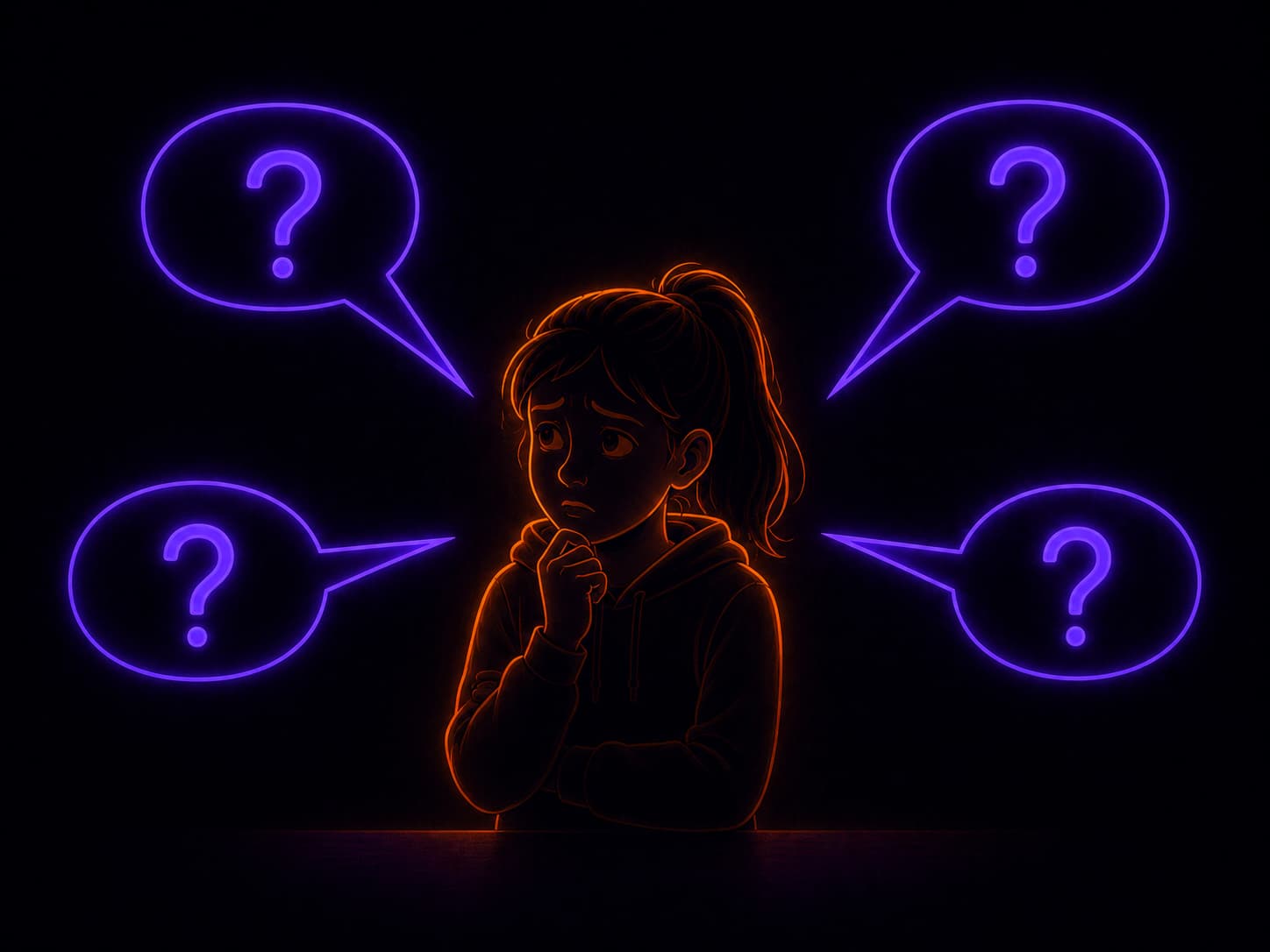
It's not a question — it's a hidden accusation
The wording already hides an assumption that the child did something. "Have you stopped yet?" — both "yes" and "no" confirm they were doing it. There's no honest answer: the very form of the question leaves no way out.
This isn't "not knowing what to say" or freezing from shame. The child falls into a trap: the question sounds ordinary, so they start to answer it — and by doing so accept someone else's version of events as the starting point.
The result — the child defends and excuses themselves for something that never happened. They agree with the hidden accusation simply because they answered the question — and someone else's "version" becomes their truth about themselves.
"Sila Slova" — a detective drama that teaches critical thinking
50 episodes, 13 critical thinking lessons. Your child plays — but is actually learning to protect themselves.
Notices that the question already hides an accusation
Answers the substance, not the form — the assumption itself
Stops the question and brings back reality: "I didn't do that", "that's not true"
️ Doesn't accept someone else's "version of events" as the truth about themselves
Give your child the superpower of critical thinking
Episode 1 · Morning Without a Sister
Mum says there was never a sister. The school doesn't remember Sofia. But Marco remembers her laugh — and the diary in his hands is real…
Social proof
- Children completed the course
- 2,400+
- Satisfied parents
- 94%
- Optimal age
- 10–16 yrs
"Why did you do it again?" used to send my son straight into excuses. Now he says first: "Wait, I didn't do that" — and won't let something that never happened be pinned on him.
Questions about the course
Both at the same time. "Sila Slova" looks like a detective series, but every episode contains a hidden critical thinking lesson.
Ideal for 10–16 year olds. At this age, children are receptive to new thinking patterns and are still forming their views.
15–20 minutes per episode. Flexible schedule — your child can come back at any convenient time.
No. The demo episode is fully open — no registration, no subscription, no personal data required.
Try the demo — no registration required
Play demo