"You're normal, right?" — and your child already agrees
One phrase — and they're already proving their "normality" through action. This isn't about character — it's manipulation they don't even notice.
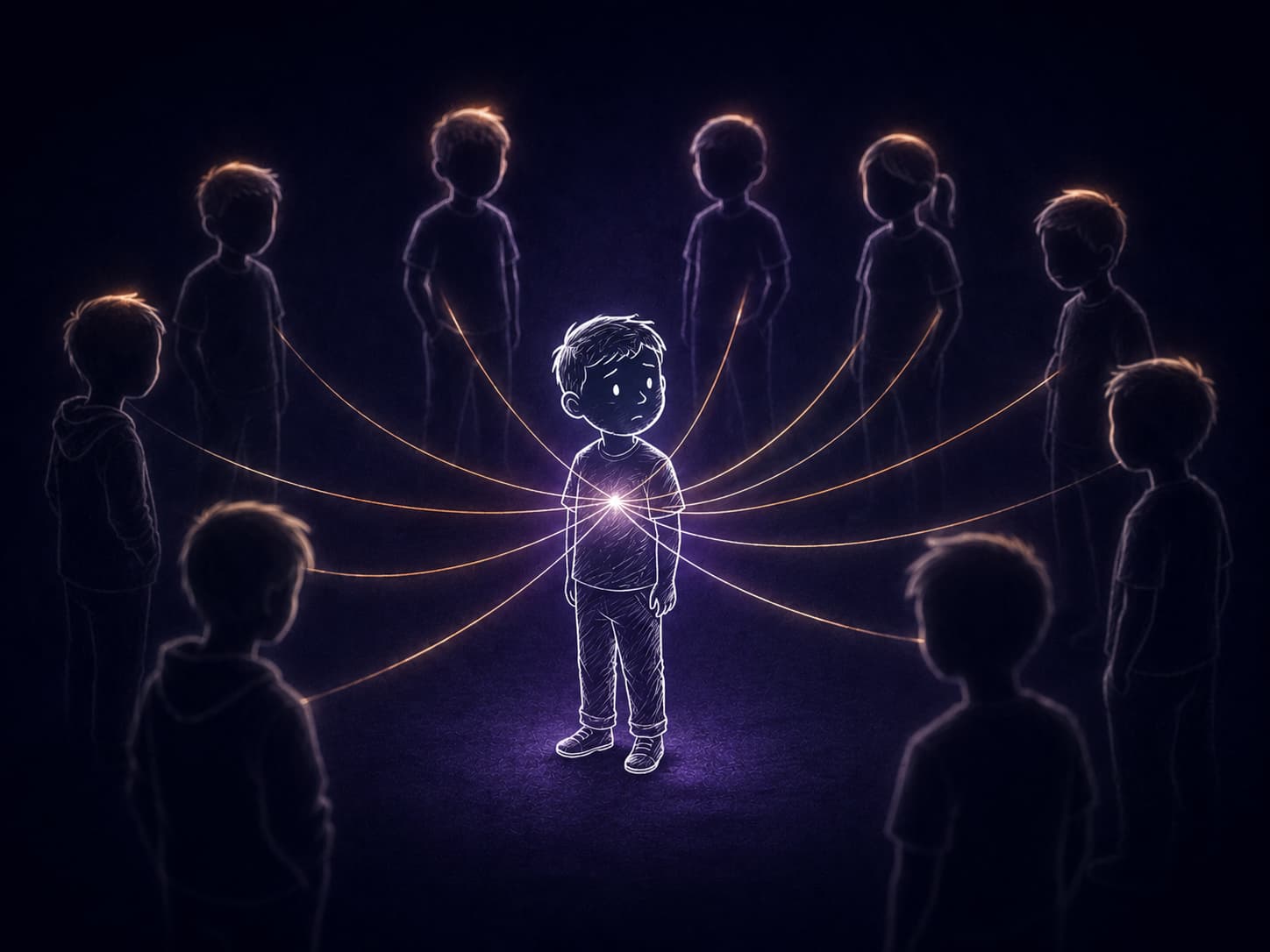
"Normal / not normal" is a label, not a question
In class, in a group, in a chat — someone throws out "you're normal, right?" and your child already doubts themselves. They're not sure, but they choose to agree — to avoid looking weird, to avoid falling out of the group.
This isn't about friendship or "normality". It's manipulation through fear of rejection. The child is handed a label and pressured to prove their "normality" through action. Without the skill to recognise this, they agree automatically.
The result — decisions are made not for themselves, but to avoid discomfort. The child gradually loses their sense of self and lives in a constant state of adjusting to others.
"Sila Slova" — a detective drama that teaches critical thinking
50 episodes, 13 critical thinking lessons. Your child plays — but is actually learning to protect themselves.
Recognises the "normal/not normal" label as a manipulation tactic
Understands that "normality" is not a reason to agree
Can respond calmly without proving anything to anyone
️ Stays true to themselves when others try to fit them into a mould
Give your child the superpower of critical thinking
Episode 1 · Morning Without a Sister
Mum says there was never a sister. The school doesn't remember Sofia. But Marco remembers her laugh — and the diary in his hands is real…
Social proof
- Children completed the course
- 2,400+
- Satisfied parents
- 94%
- Optimal age
- 10–16 yrs
My daughter now hears "you're normal, right?" and replies: "yes, that's why I don't do things I don't want to do". I'm so proud of her.
Questions about the course
Both at once. "Sila Slova" looks like a detective series, but every episode contains a hidden critical thinking lesson.
Ideal for 10–16 year olds. At this age, children are receptive to new thinking patterns and are still forming their views.
15–20 minutes per episode. Flexible schedule — your child can come back at any convenient time.
No. The demo episode is fully open — no registration, no subscription, no personal data required.
Try the demo — no registration required
Play demo