Your child disagrees — and the conversation instantly turns into a fight?
"You don't understand anything", "you're one to talk", "there's no point talking to you". Instead of a discussion — an attack. Because your child can't tell disagreement from an attack.
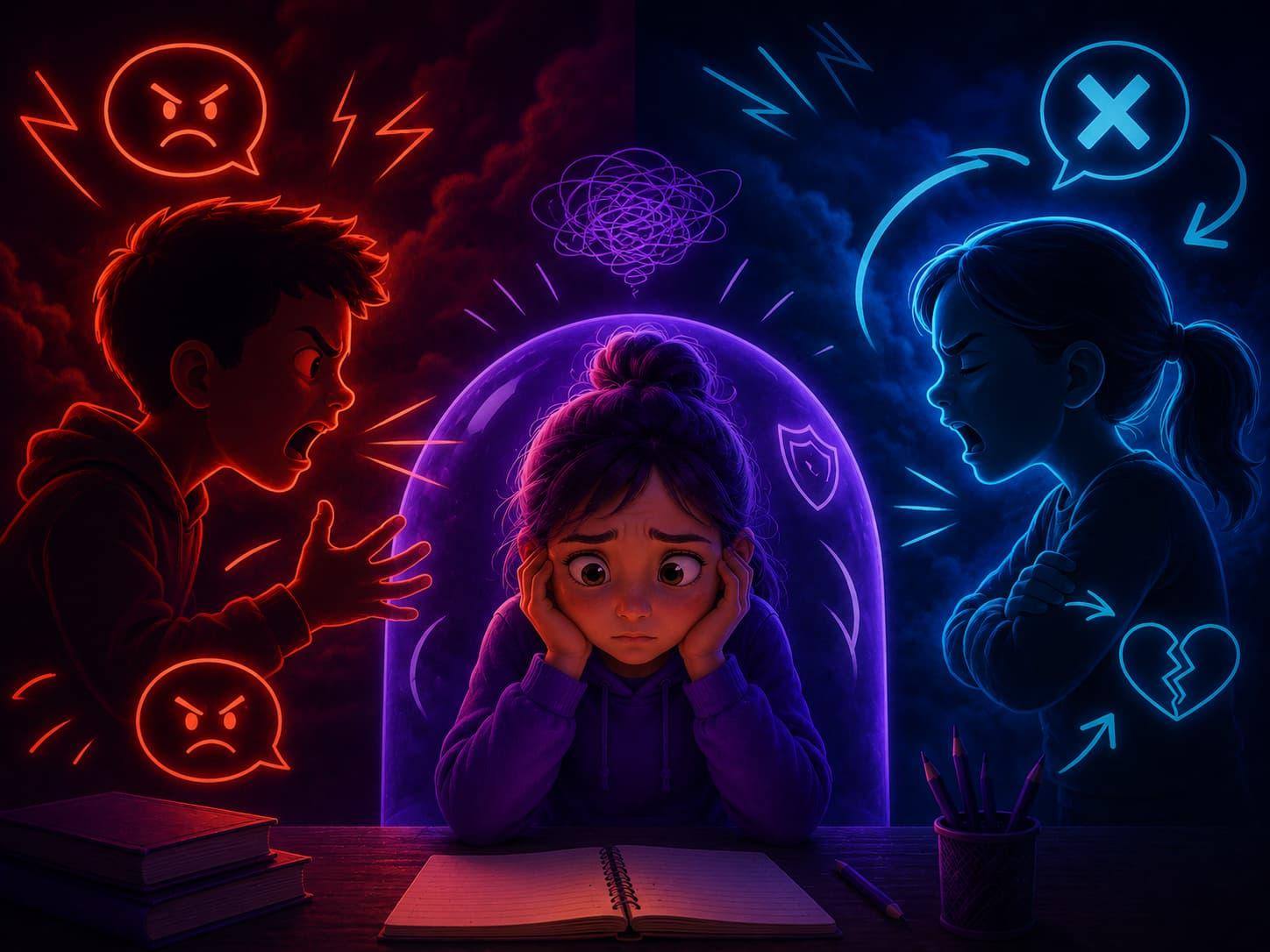
Disagreement or attack — and any "no" turns into a fight
Your child says "I think differently" — and the conversation instantly explodes. "You don't understand anything", "you're one to talk", "there's no point talking to you" — at school, in chats, in everyday conversation. Instead of a discussion, an attack begins. The child either fires back or goes silent.
But disagreement isn't an attack. You can disagree with an idea without touching the person. When the two get mixed up, any "I think differently" feels like a personal insult — both theirs and the other person's.
Without the skill to separate the position from the person, the conversation quickly turns into a quarrel. The result — the child either "fights with words" or stops speaking up altogether. Not because they're aggressive, but because they don't see the difference between "I disagree" and "you're bad".
"Sila Slova" — a detective drama that teaches critical thinking
50 episodes, 13 critical thinking lessons. Your child plays — but is actually learning to defend themselves with words.
Tells the difference between disagreeing with an idea and attacking a person
Argues on the merits without making it personal
Understands: you can disagree and still stay in a normal conversation
️ Stands up for their opinion without blowing up into conflict or going silent
Give your child the superpower of critical thinking
Episode 1 · Morning Without a Sister
Mum says there was never a sister. The school doesn't remember Sofia. But Marco remembers her laugh — and the diary in his hands is real…
Social proof
- Children completed the course
- 2,400+
- Satisfied parents
- 94%
- Optimal age
- 10–16 yrs
Any disagreement used to end in a fight. Now she says "I don't agree with this" — and it's not an insult, just a different opinion.
Questions about the course
Both at the same time. "Sila Slova" looks like a detective series, but every episode contains a hidden critical thinking lesson.
Ideal for 10–16 year olds. At this age, children are receptive to new thinking patterns and are still forming their views.
15–20 minutes per episode. Flexible schedule — your child can come back at any convenient time.
No. The demo episode is fully open — no registration, no subscription, no personal data required.
Try the demo — no registration required
Play demo