Your child says "yes" while inside it's a "no" — just to avoid the awkwardness?
"Come on, you're a normal person", "what, is it too much to ask?", "don't be like that". Nobody pushes directly — but saying no feels awkward. So the child agrees, just to make the discomfort go away.
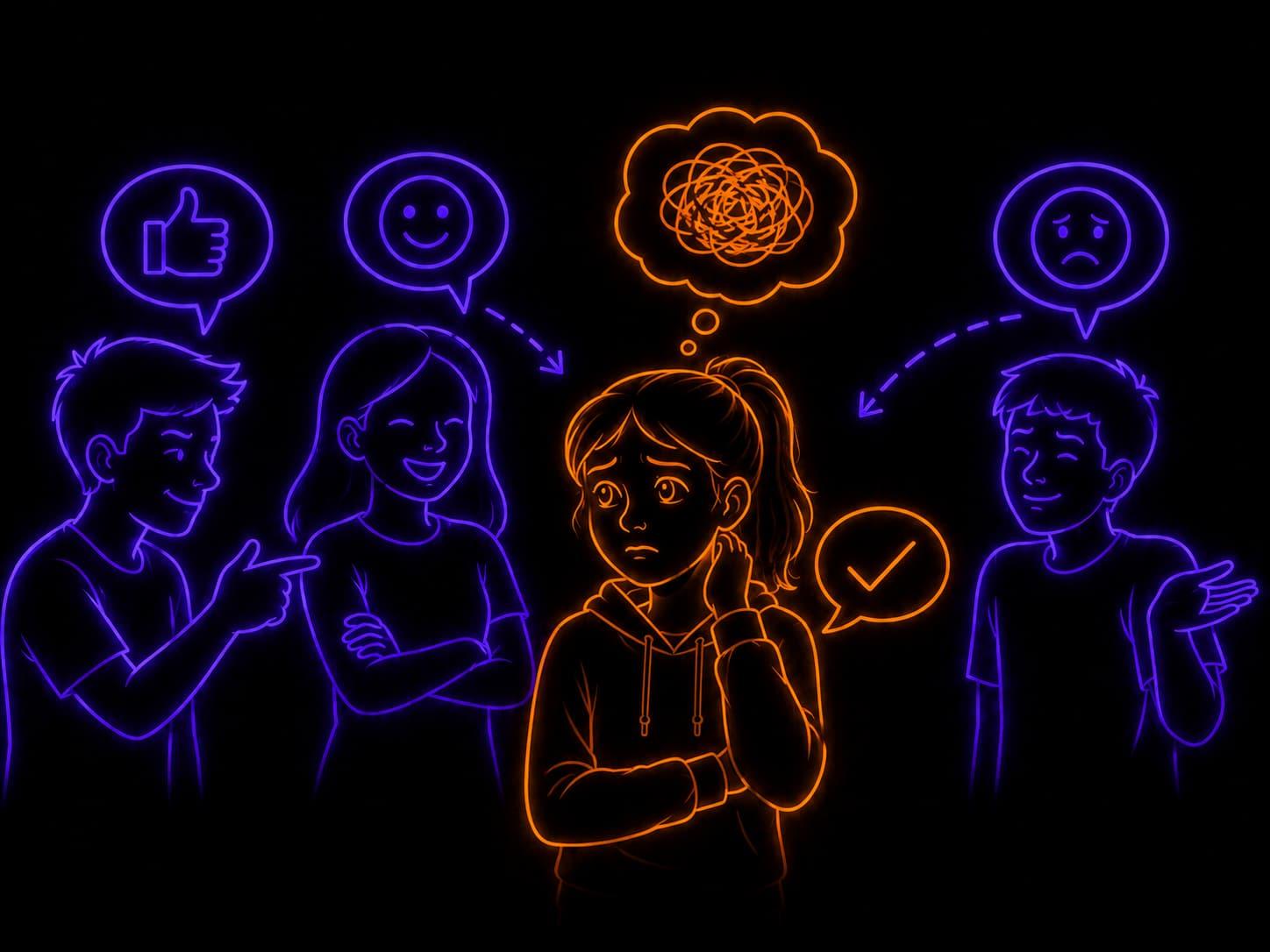
"Yes" not because they want to, but to avoid the awkwardness
Your child says "yes" while inside it's a "no". "Come on, you're a normal person", "what, is it too much to ask?", "don't be like that" — at school, among friends, in conversation. Nobody pushes directly, but saying no feels awkward. The child agrees just to avoid that discomfort.
But this isn't a request — it's manipulation through feelings. An emotion is created in the child — shame, awkwardness, the fear of looking "bad". And the decision is made not out of desire, but to make that feeling disappear.
Without the skill to spot it, the child agrees automatically. The result — they do not what they want, but what's "easier to get through". Not because they're spineless, but because they're reacting to social pressure.
"Sila Slova" — a detective drama that teaches critical thinking
50 episodes, 13 critical thinking lessons. Your child plays — but is actually learning to defend themselves with words.
Spots the moment when awkwardness is being created to get a "yes"
Separates their own decision from other people's emotions
Understands: "I feel awkward" is not a reason to agree
️ Can say "no" even when it feels uncomfortable inside
Give your child the superpower of critical thinking
Episode 1 · Morning Without a Sister
Mum says there was never a sister. The school doesn't remember Sofia. But Marco remembers her laugh — and the diary in his hands is real…
Social proof
- Children completed the course
- 2,400+
- Satisfied parents
- 94%
- Optimal age
- 10–16 yrs
He used to agree to everything just to avoid feeling awkward. Now he calmly says "no" — and no longer does things he doesn't want to.
Questions about the course
Both at the same time. "Sila Slova" looks like a detective series, but every episode contains a hidden critical thinking lesson.
Ideal for 10–16 year olds. At this age, children are receptive to new thinking patterns and are still forming their views.
15–20 minutes per episode. Flexible schedule — your child can come back at any convenient time.
No. The demo episode is fully open — no registration, no subscription, no personal data required.
Try the demo — no registration required
Play demo