Your child says yes — even when they want to say no?
They let others copy, go places they don't want to go, stay silent when their boundaries are crossed. This isn't weakness — it's a skill no one ever taught them.
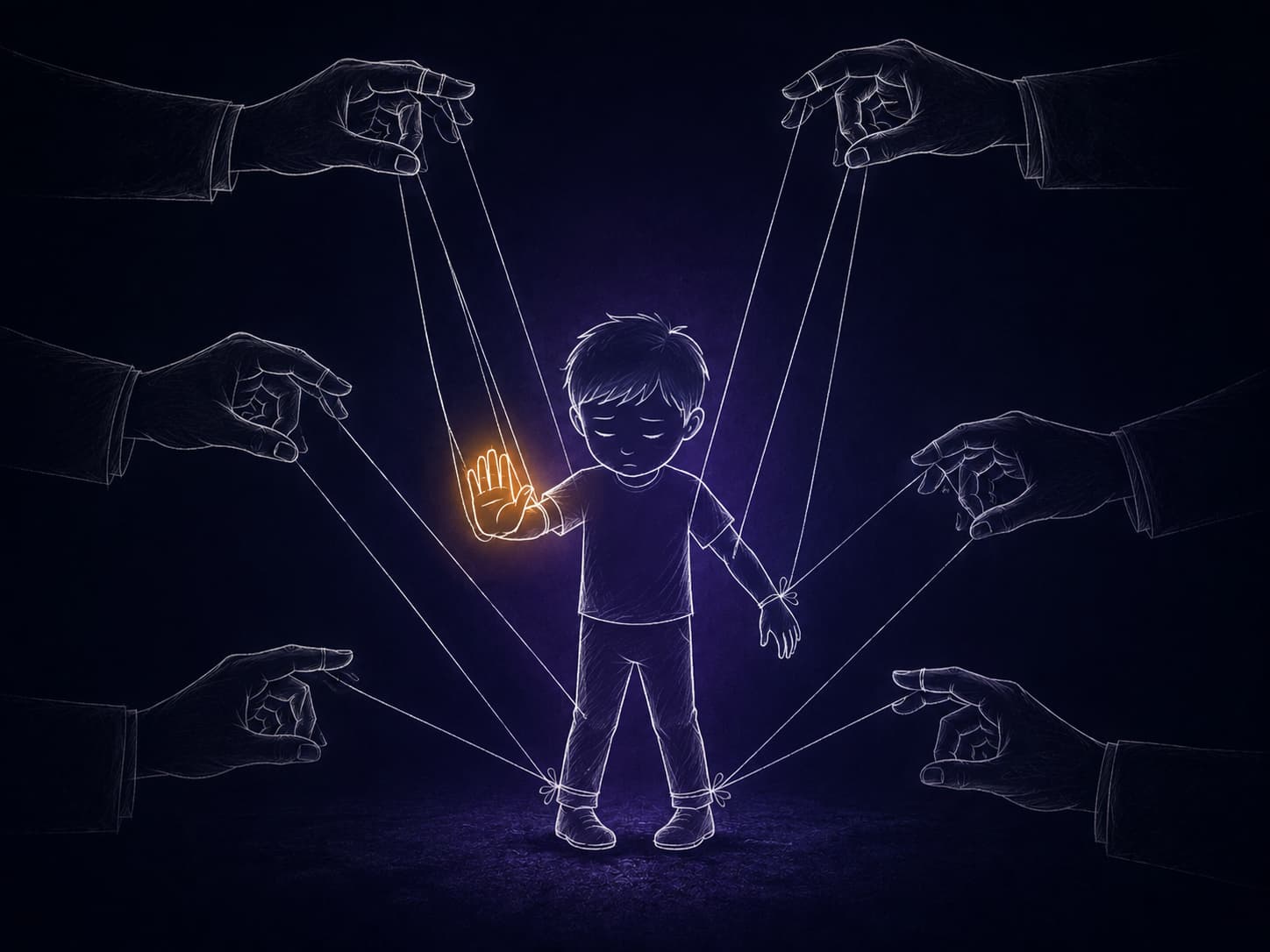
Not being able to say no isn't politeness — it's a missing skill
At school, in group chats, at the playground — someone asks, pressures, or acts hurt, and your child already says "okay". Not because they want to. Because they're afraid of looking bad, hurting someone's feelings, or losing acceptance.
This isn't about character. It's about manipulation your child can't recognise: pressure, guilt-tripping, "if you were a real friend, you'd help me". When there are no ready phrases and no inner foundation, agreeing is simply the easiest option.
The result: their boundaries gradually disappear, and others get used to taking advantage. The child builds up resentment but doesn't know how to change things without causing conflict.
"Sila Slova" — a detective drama that teaches critical thinking
50 episodes, 13 critical thinking lessons. Your child plays — but is actually learning to protect themselves.
Recognises manipulation: pressure, guilt-tripping, "a real friend would help"
Understands why they say yes automatically — and how to stop it
Has ready phrases to say no without conflict or guilt
️ Can say no — and still feel okay about themselves and others
Give your child the superpower of critical thinking
Episode 1 · Morning Without a Sister
Mum says there was never a sister. The school doesn't remember Sofia. But Marco remembers her laugh — and the diary in his hands is real…
Social proof
- Children completed the course
- 2,400+
- Satisfied parents
- 94%
- Optimal age
- 10–16 yrs
My son finally stopped letting the whole class copy from him. He just said no — and nothing terrible happened. It was a revelation for him.
Questions about the course
Both at once. "Sila Slova" looks like a detective series, but every episode contains a hidden critical thinking lesson.
Ideal for 10–16 year olds. At this age, children are receptive to new thinking patterns and are still forming their views.
15–20 minutes per episode. Flexible schedule — your child can come back at any convenient time.
No. The demo episode is fully open — no registration, no subscription, no personal data required.
Try the demo — no registration required
Play demo