Does your child believe the face — or the facts?
"He's successful." "She's popular." "He wouldn't say something silly." A familiar face triggers trust before any content even appears — and your child believes because they recognise it, without ever checking the words.
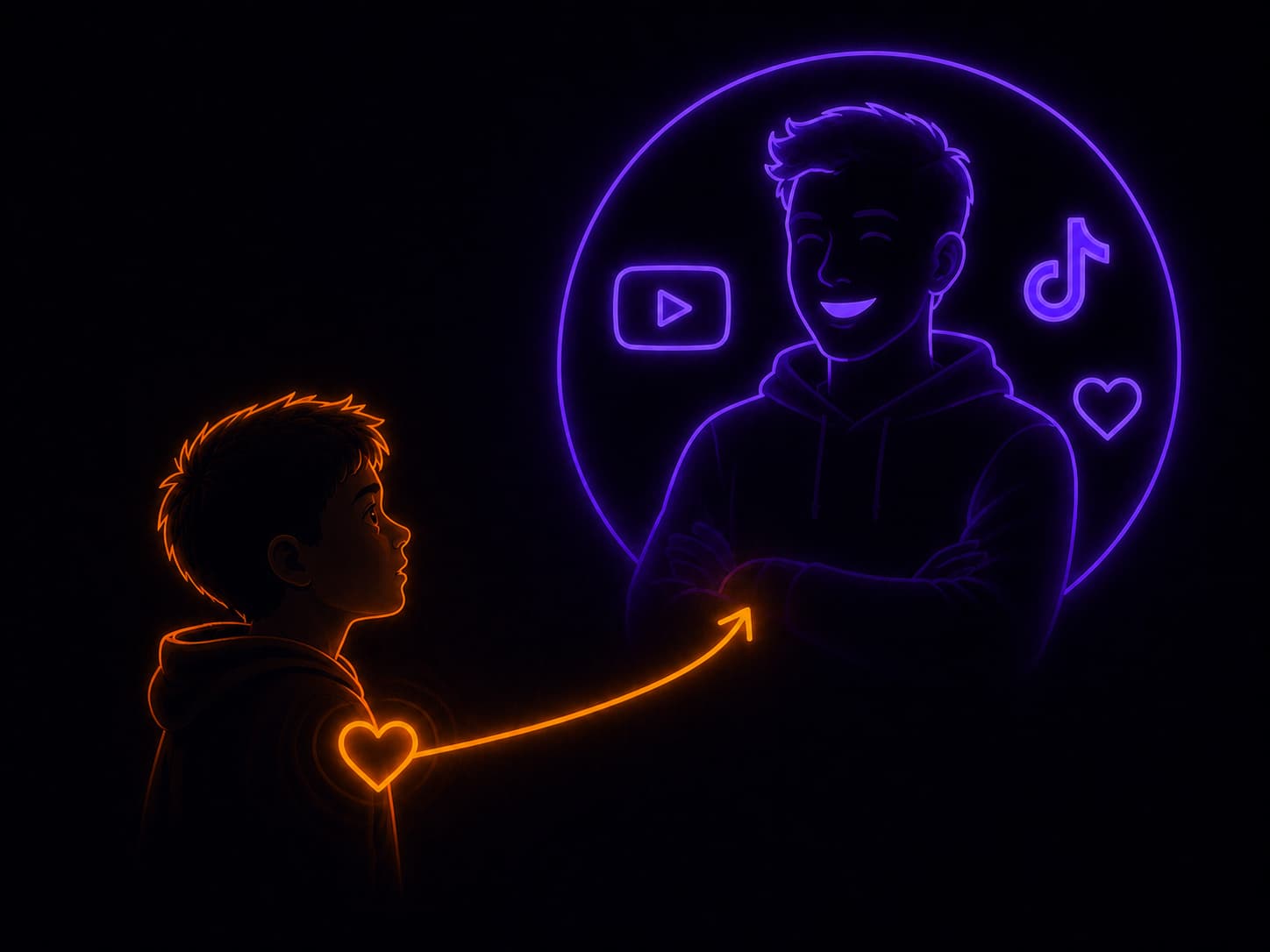
A face isn't proof
A familiar person can inspire trust — but that doesn't mean their words are right. They can be mistaken, know nothing about the topic, or simply be advertising something. The fact that we recognise a face says nothing about whether what it says is true.
This isn't being naive or gullible. The child is simply reacting to familiarity and status: a recognised face automatically feels like "one of us", someone to be believed. Without the skill of separating the two, they take in "who said it" instead of "what was said" — and trust shows up before any checking does.
The result — the child trusts the image, not the facts. They repeat, buy, and believe because "it's him/her" — not because there's anything true behind the words.
"Sila Slova" — a detective drama that teaches critical thinking
50 episodes, 13 critical thinking lessons. Your child plays — but is actually learning to protect themselves.
Notices when trust comes from the face, not the content
Switches attention from "who said it" to "what they actually said"
Understands: a familiar face is not an argument
️ Doesn't trust automatically just because someone famous said it
Give your child the superpower of critical thinking
Episode 1 · Morning Without a Sister
Mum says there was never a sister. The school doesn't remember Sofia. But Marco remembers her laugh — and the diary in his hands is real…
Social proof
- Children completed the course
- 2,400+
- Satisfied parents
- 94%
- Optimal age
- 10–16 yrs
"But he said it" used to settle it for my daughter. Now she asks first: "But why is it true?" — and sees for herself that she was trusting the face, not the words.
Questions about the course
Both at the same time. "Sila Slova" looks like a detective series, but every episode contains a hidden critical thinking lesson.
Ideal for 10–16 year olds. At this age, children are receptive to new thinking patterns and are still forming their views.
15–20 minutes per episode. Flexible schedule — your child can come back at any convenient time.
No. The demo episode is fully open — no registration, no subscription, no personal data required.
Try the demo — no registration required
Play demo