"I did it and it happened!" — and your child already believes in accidental patterns?
"After" doesn't mean "because of". But the brain loves quick conclusions. And that can lead to decisions with no real basis.
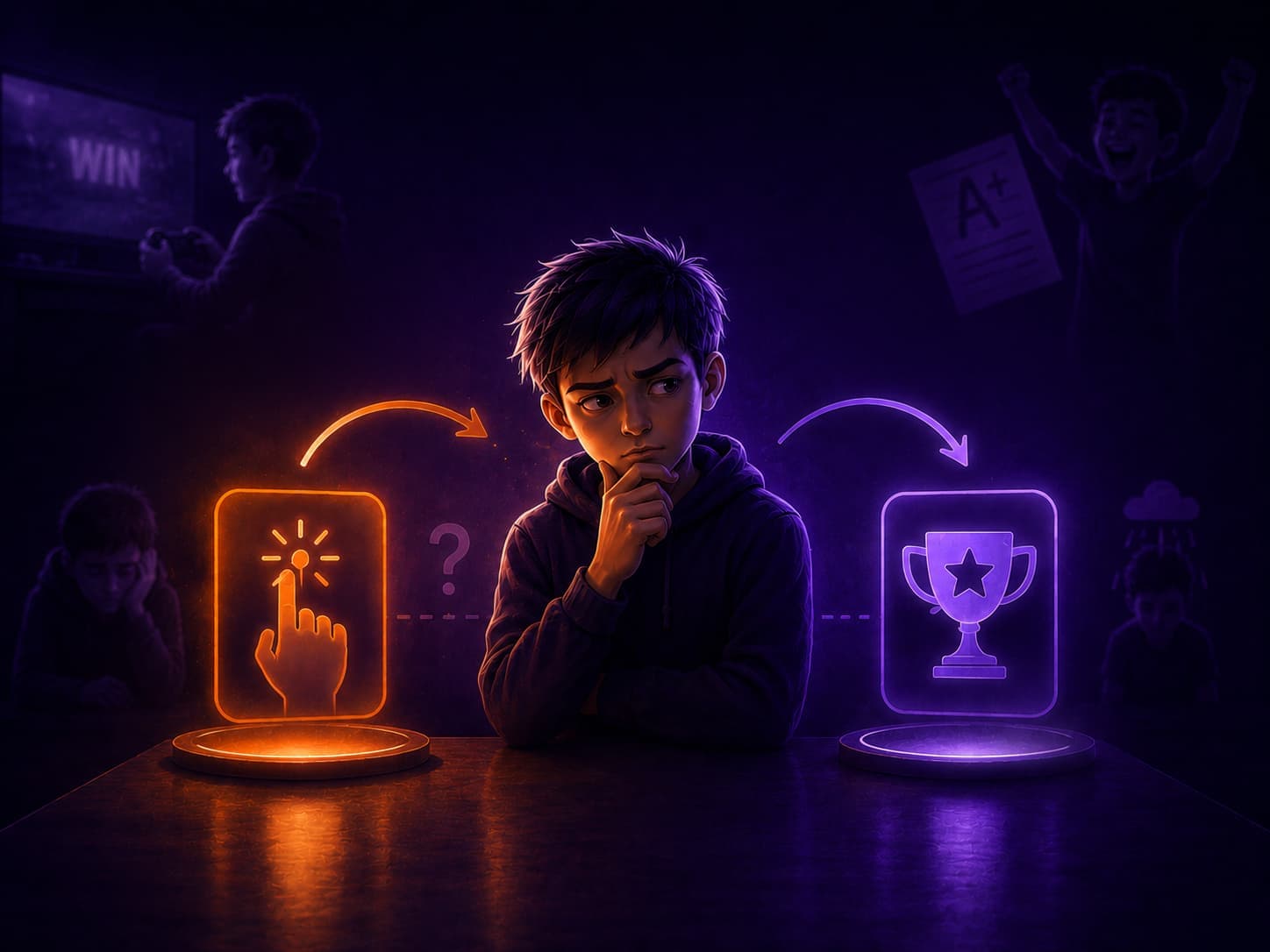
"After" doesn't mean "because of". But that's exactly how it feels
"I wore these trainers and we won", "I didn't study and got a bad mark — so that must be why", "I did that and everything went wrong". At school, in sport, in everyday life. The child tries to find an explanation — and finds one, but not always the right one.
This isn't illogical thinking — it's the brain working naturally: it looks for connections between events to make sense of the world. But what happened "after" didn't necessarily happen "because of". A coincidence isn't a cause. Without the skill to check, the child starts believing in accidental patterns.
The result — wrong decisions and fears with no real foundation. Lucky trainers, avoiding certain actions, fear of repeating a "mistake" — all of it grows from an unconfirmed connection.
"Sila Slova" — a detective drama that teaches critical thinking
50 episodes, 13 critical thinking lessons. Your child plays — but is actually learning to protect themselves.
Tells cause from coincidence — "after" ≠ "because of"
Checks whether events are actually connected before drawing conclusions
Doesn't believe in accidental "rules" without real evidence
️ Makes decisions based on reality, not false patterns
Give your child the superpower of critical thinking
Episode 1 · Morning Without a Sister
Mum says there was never a sister. The school doesn't remember Sofia. But Marco remembers her laugh — and the diary in his hands is real…
Social proof
- Children completed the course
- 2,400+
- Satisfied parents
- 94%
- Optimal age
- 10–16 yrs
My son stopped wearing his "lucky" T-shirt to every test. He told me himself: "It's just a coincidence, Mum." That was a real moment for me.
Questions about the course
Both at the same time. "Sila Slova" looks like a detective series, but every episode contains a hidden critical thinking lesson.
Ideal for 10–16 year olds. At this age, children are receptive to new thinking patterns and are still forming their views.
15–20 minutes per episode. Flexible schedule — your child can come back at any convenient time.
No. The demo episode is fully open — no registration, no subscription, no personal data required.
Try the demo — no registration required
Play demo