Does your child trust advice just because a "famous" person gives it?
"A blogger recommends it." "An athlete said so." "A star advertises it." It sounds convincing — because the person is successful. And your child trusts it automatically, without ever asking whether that person actually knows the subject.
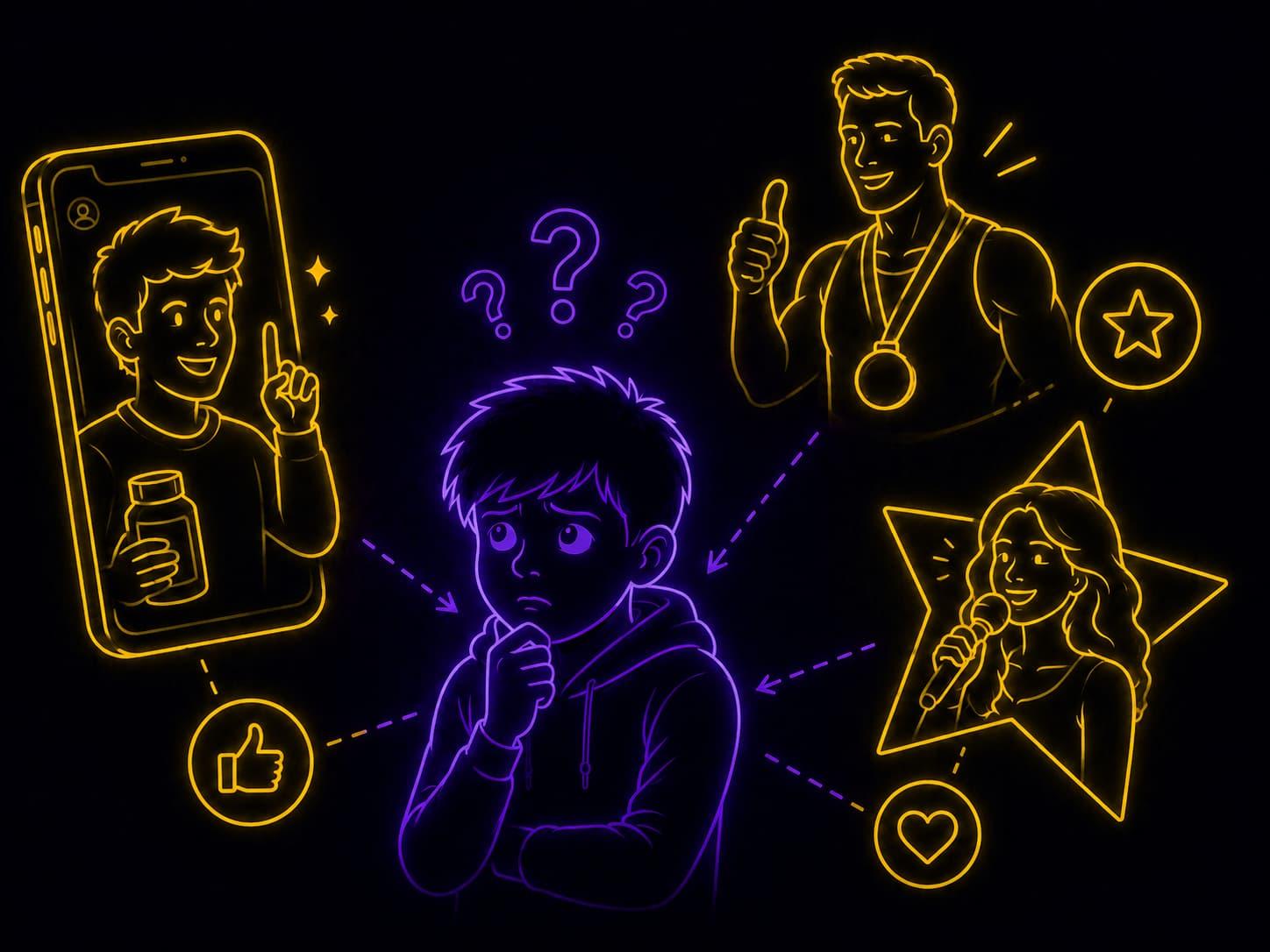
Being famous isn't being an expert
A person can sing beautifully, play football, or be popular online — but none of that says whether they know anything about health, money, studying, or whatever else they're recommending. Success in one thing doesn't make them an expert in everything.
This isn't being naive or gullible. The child is simply reacting to authority: if someone is famous and successful, it feels like they can be trusted. Without the habit of checking, any "famous" person automatically becomes a source of truth — even though they may know no more about the actual topic than anyone else.
The result — the child trusts the name, not the knowledge. They buy, repeat, and choose because "a star said so" — not because there's real competence behind the advice.
"Sila Slova" — a detective drama that teaches critical thinking
50 episodes, 13 critical thinking lessons. Your child plays — but is actually learning to protect themselves.
Notices when fame is used as the argument instead of knowledge
Asks one simple question: "do they actually know this?"
Separates popularity from competence
️ Doesn't trust advice just because someone famous gave it
Give your child the superpower of critical thinking
Episode 1 · Morning Without a Sister
Mum says there was never a sister. The school doesn't remember Sofia. But Marco remembers her laugh — and the diary in his hands is real…
Social proof
- Children completed the course
- 2,400+
- Satisfied parents
- 94%
- Optimal age
- 10–16 yrs
"My favourite blogger recommends it" used to be an ironclad argument for my son. Now he asks: "But does he actually know about this?" — and sees for himself that famous ≠ the one who knows.
Questions about the course
Both at the same time. "Sila Slova" looks like a detective series, but every episode contains a hidden critical thinking lesson.
Ideal for 10–16 year olds. At this age, children are receptive to new thinking patterns and are still forming their views.
15–20 minutes per episode. Flexible schedule — your child can come back at any convenient time.
No. The demo episode is fully open — no registration, no subscription, no personal data required.
Try the demo — no registration required
Play demo