Does your child agree just to make the unease go away?
"Buy it and you won't worry." "Do it and everything will be fine." "Otherwise it'll be bad." First the tension is created — then an "exit" is handed over right away. And your child acts to remove the uncomfortable feeling, not because it's actually needed.
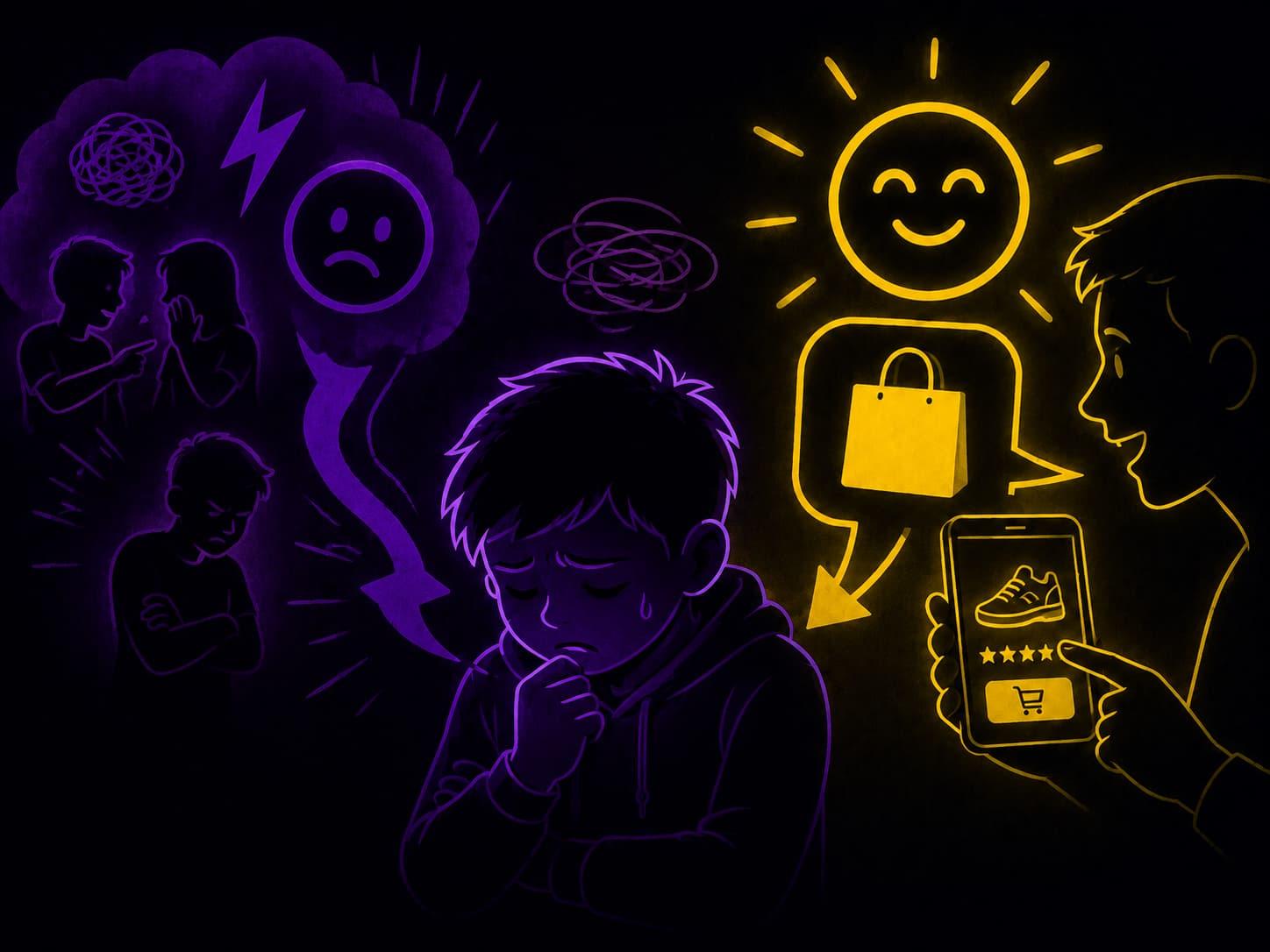
This isn't a solution — it's a way to sell through fear
The pattern is always the same: first they scare or unsettle you — "it'll be bad", "you'll lose out", "everyone will see". Then they immediately offer an action that supposedly removes it: "buy", "do it", "agree". The tension and the "exit" come as a pair — and that's exactly why it works.
This isn't gullibility or weakness. The child just wants the discomfort gone fast — and grabs the first thing that removes it. The decision is made through emotion ("I want it to stop being scary"), not through logic ("do I actually need this?").
The result — the child agrees or "buys" not because it's needed, but to feel calmer. And once the tension passes, it often turns out the decision wasn't theirs at all — it belonged to whoever created the tension.
"Sila Slova" — a detective drama that teaches critical thinking
50 episodes, 13 critical thinking lessons. Your child plays — but is actually learning to protect themselves.
Spots the pattern "scare first, hand over the exit right away"
Separates emotion from decision: "do I want this, or do I just want to calm down?"
Understands: being scared first doesn't make the decision right
️ Doesn't make a decision just to make the fear go away
Give your child the superpower of critical thinking
Episode 1 · Morning Without a Sister
Mum says there was never a sister. The school doesn't remember Sofia. But Marco remembers her laugh — and the diary in his hands is real…
Social proof
- Children completed the course
- 2,400+
- Satisfied parents
- 94%
- Optimal age
- 10–16 yrs
My son used to grab at any "do it and it'll be fine". Now he asks first: "But do I even need this?" — and sees for himself when he's just being sold peace of mind.
Questions about the course
Both at the same time. "Sila Slova" looks like a detective series, but every episode contains a hidden critical thinking lesson.
Ideal for 10–16 year olds. At this age, children are receptive to new thinking patterns and are still forming their views.
15–20 minutes per episode. Flexible schedule — your child can come back at any convenient time.
No. The demo episode is fully open — no registration, no subscription, no personal data required.
Try the demo — no registration required
Play demo