"Nobody likes a greedy kid!" — and your child gives up who they are just to be accepted?
They share not because they want to. But because they're afraid of being labelled. This isn't about generosity — it's shame manipulation.
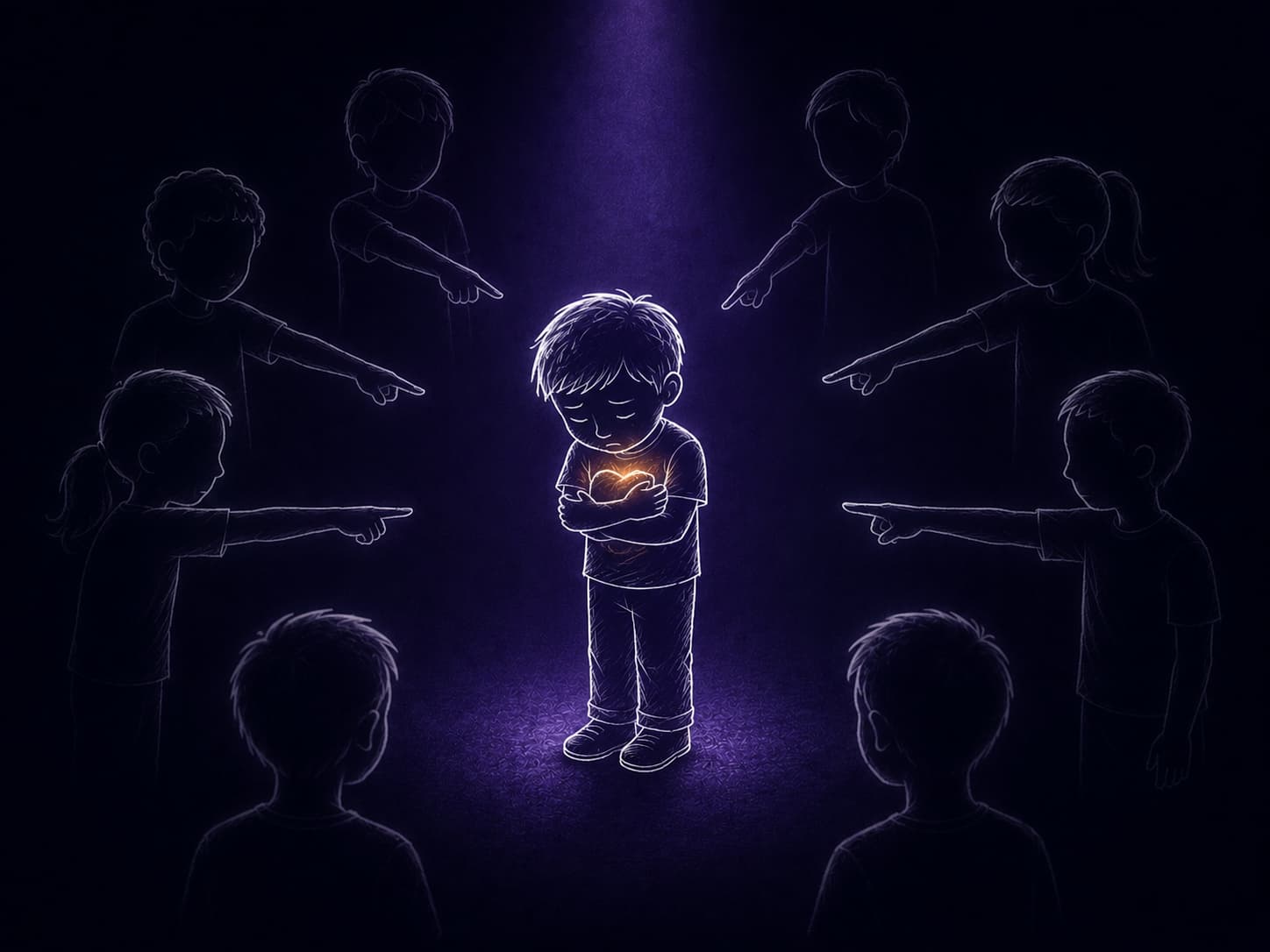
"Greedy" is a label used to make children act against themselves
At school, among friends, during break — someone says "nobody likes a greedy kid" and your child is already reaching for their things. Not because they want to share. But because they're afraid of being called greedy.
This isn't about generosity or learning to share. It's manipulation through shame: a label is attached to the child and they're pushed to act in order to avoid it. Without the skill to recognise this pattern, they give in automatically — even at their own expense.
The result — their boundaries gradually disappear, and others learn that one word is enough to make them back down. The child feels resentment but doesn't understand why — after all, they're "not greedy".
"Sila Slova" — a detective drama that teaches critical thinking
50 episodes, 13 critical thinking lessons. Your child plays — but is actually learning to protect themselves.
Recognises "nobody likes a greedy kid" as shame manipulation
Understands the difference between genuine generosity and fear of a label
Can say no without guilt — even when shamed into it
️ Keeps what's theirs without accepting labels others try to impose
Give your child the superpower of critical thinking
Episode 1 · Morning Without a Sister
Mum says there was never a sister. The school doesn't remember Sofia. But Marco remembers her laugh — and the diary in his hands is real…
Social proof
- Children completed the course
- 2,400+
- Satisfied parents
- 94%
- Optimal age
- 10–16 yrs
"Nobody likes a greedy kid" doesn't work on my son anymore. He can choose not to share — and not feel guilty about it.
Questions about the course
Both at the same time. "Sila Slova" looks like a detective series, but every episode contains a hidden critical thinking lesson.
Ideal for 10–16 year olds. At this age, children are receptive to new thinking patterns and are still forming their views.
15–20 minutes per episode. Flexible schedule — your child can come back at any convenient time.
No. The demo episode is fully open — no registration, no subscription, no personal data required.
Try the demo — no registration required
Play demo