"It didn't work once, so it will never work!" — and your child has already written themselves off?
One episode isn't a rule. But the brain rushes to close the case. And the child limits themselves before they've even really tried.
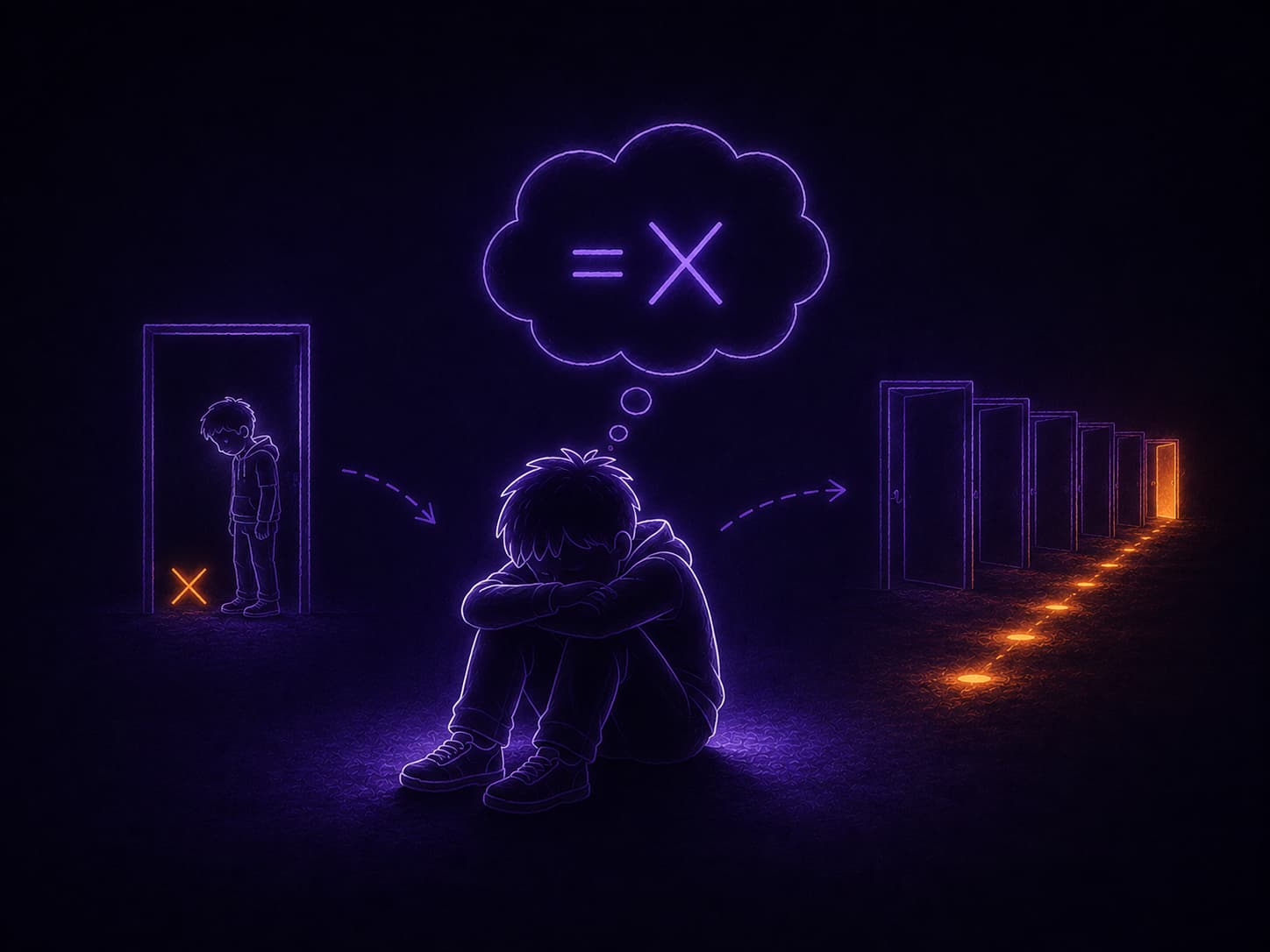
"It didn't work" is one result — not a verdict
Didn't answer in class — "I can't do it". Lost a game — "I'm not good enough". Something went wrong — "that's just not for me". At school, in sport, in friendships. One episode becomes "the truth about me" — and the child stops trying.
This isn't giving up quickly or weakness. It's the brain working naturally: it tries to draw a fast conclusion and move on. But one time isn't a rule. A real conclusion takes repetition, testing, experience.
The result — the child limits themselves before they've genuinely tried. "Not for me", "I can't", "it won't work" — labels they put on themselves, and they tend to stick.
"Sila Slova" — a detective drama that teaches critical thinking
50 episodes, 13 critical thinking lessons. Your child plays — but is actually learning to protect themselves.
Catches "always/never" conclusions drawn from a single event
Tells one result apart from a truth about themselves
Questions "that's not for me" and gives themselves another chance
️ Doesn't label themselves after a first failure
Give your child the superpower of critical thinking
Episode 1 · Morning Without a Sister
Mum says there was never a sister. The school doesn't remember Sofia. But Marco remembers her laugh — and the diary in his hands is real…
Social proof
- Children completed the course
- 2,400+
- Satisfied parents
- 94%
- Optimal age
- 10–16 yrs
My daughter lost a tournament and said "I'll never win". A month after the course she said: "That was just one time. I'll try again." I couldn't believe what I was hearing.
Questions about the course
Both at the same time. "Sila Slova" looks like a detective series, but every episode contains a hidden critical thinking lesson.
Ideal for 10–16 year olds. At this age, children are receptive to new thinking patterns and are still forming their views.
15–20 minutes per episode. Flexible schedule — your child can come back at any convenient time.
No. The demo episode is fully open — no registration, no subscription, no personal data required.
Try the demo — no registration required
Play demo