"No one will be your friend!" — and your child is already afraid of being left alone?
Fear of rejection is one of the most powerful forces. When it's used as a threat — children give in. Even when they don't want to.
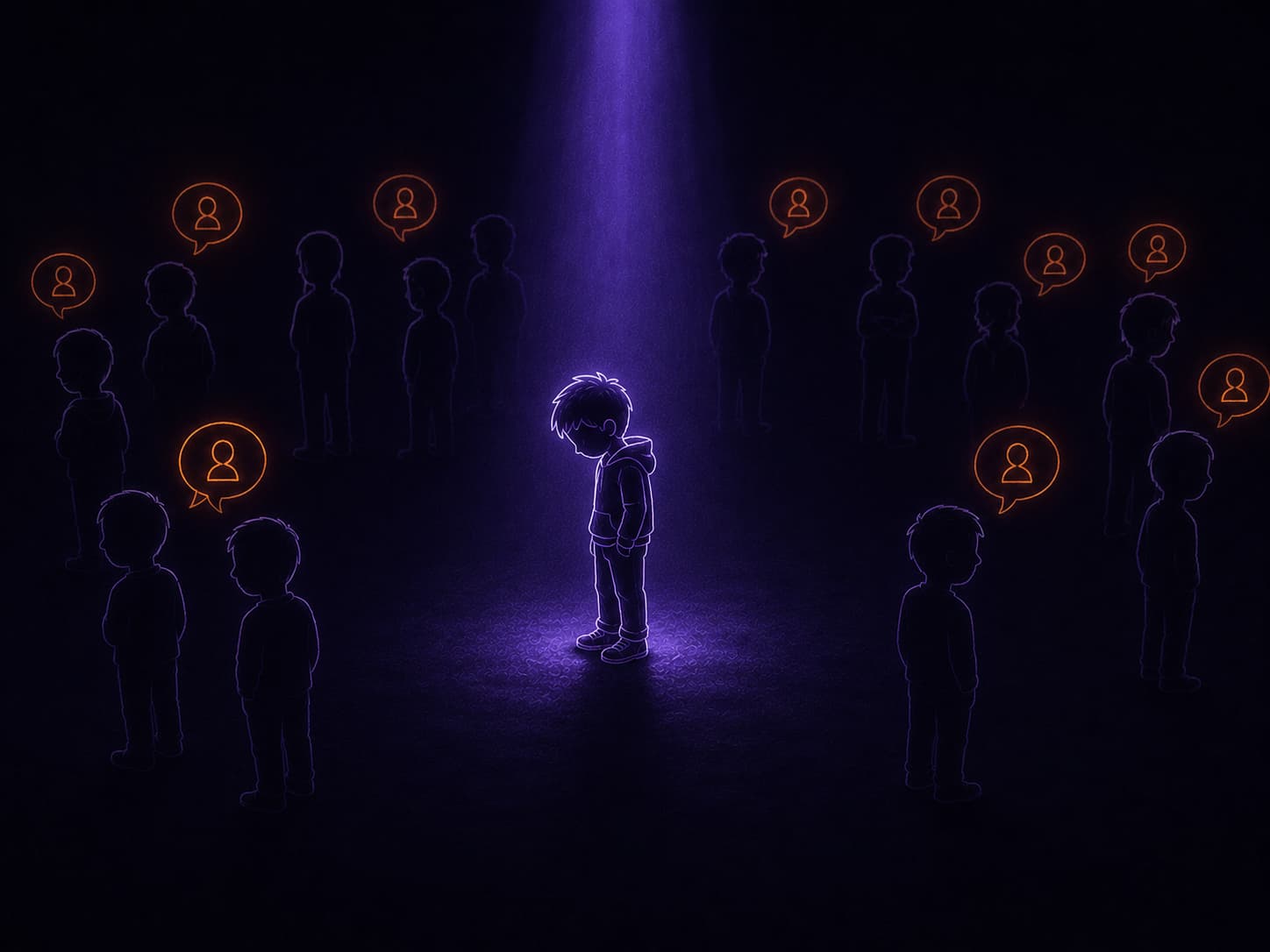
"Everyone will turn away" — that's not a forecast, it's pressure
"No one will be your friend", "everyone will turn away", "you'll be left alone". In class, in a group, in a chat. The child might have doubts — but the fear of isolation is stronger. And they give in. Even when they didn't want to.
This isn't being dependent on others or weakness. It's a natural response to a basic fear — being rejected. When someone throws out the worst-case scenario of losing connection, the brain takes it seriously. No one checks if it's true — they just quickly agree to avoid the threat.
The result — the child abandons their own decisions to maintain acceptance. "Not my idea", "I'll agree because otherwise I'll be alone" — and this repeats every time they're pressured with the fear of loneliness.
"Sila Slova" — a detective drama that teaches critical thinking
50 episodes, 13 critical thinking lessons. Your child plays — but is actually learning to protect themselves.
Recognises the threat of isolation as a pressure tool
Doesn't take "everyone will turn away" as a real forecast
Holds their ground even when threatened with loneliness
️ Doesn't agree just to avoid being rejected
Give your child the superpower of critical thinking
Episode 1 · Morning Without a Sister
Mum says there was never a sister. The school doesn't remember Sofia. But Marco remembers her laugh — and the diary in his hands is real…
Social proof
- Children completed the course
- 2,400+
- Satisfied parents
- 94%
- Optimal age
- 10–16 yrs
"No one will be your friend" no longer makes him give in. He's learned to tell the difference between a threat and a real prediction.
Questions about the course
Both at the same time. "Sila Slova" looks like a detective series, but every episode contains a hidden critical thinking lesson.
Ideal for 10–16 year olds. At this age, children are receptive to new thinking patterns and are still forming their views.
15–20 minutes per episode. Flexible schedule — your child can come back at any convenient time.
No. The demo episode is fully open — no registration, no subscription, no personal data required.
Try the demo — no registration required
Play demo