Does your child agree just because it "sounds convincing"?
"It's cool." "It's for smart people." "It's for us." Words create a feeling — and the child reacts to that feeling before ever checking what's actually behind them.
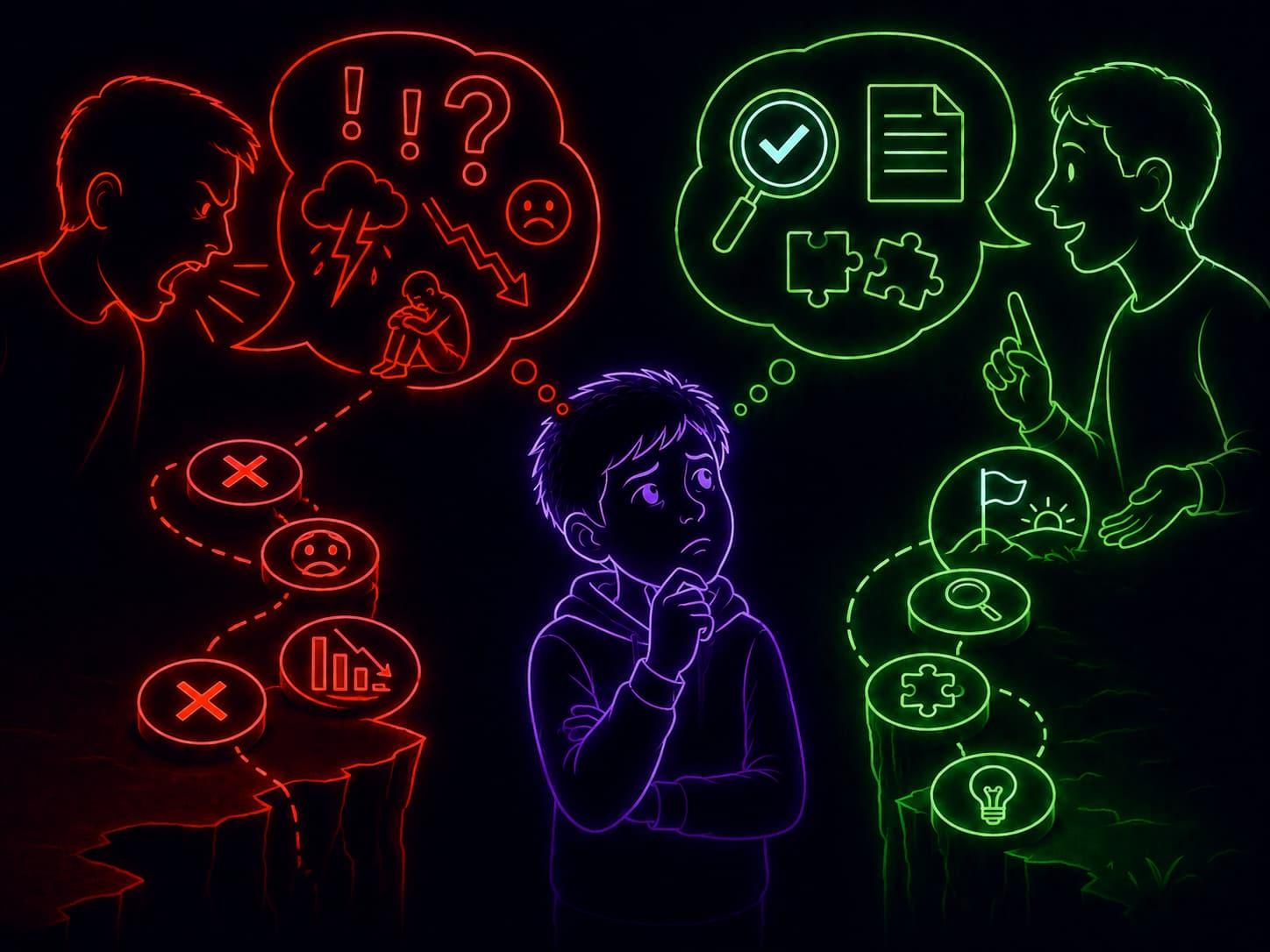
When the wording sounds more convincing than the substance
"It's cool" → and they already want it. "It's the right thing" → and arguing feels embarrassing. "It's for smart people" → and the child is afraid of looking stupid. At school, in ads, in everyday conversation — the same thing can be phrased in different ways, and each phrasing triggers a different reaction.
This isn't being gullible or naive. The child reacts naturally to how something is said: appealing words create a feeling, and the feeling runs ahead of any checking. The substance behind them may be empty — but the wording has already done its job.
The result — decisions get made under the influence of words, not real facts. The child agrees, buys, refuses — not because they worked it out, but because it "sounded good".
"Sila Slova" — a detective drama that teaches critical thinking
50 episodes, 13 critical thinking lessons. Your child plays — but is actually learning to protect themselves.
Notices when they're being convinced by wording, not by facts
Asks themselves: "what exactly was said — and is there anything real behind it?"
Separates "how it sounds" from "what it actually means"
️ Doesn't decide under the spell of appealing words — checks the substance first
Give your child the superpower of critical thinking
Episode 1 · Morning Without a Sister
Mum says there was never a sister. The school doesn't remember Sofia. But Marco remembers her laugh — and the diary in his hands is real…
Social proof
- Children completed the course
- 2,400+
- Satisfied parents
- 94%
- Optimal age
- 10–16 yrs
"It's cool" or "it's for grown-ups" used to work every time. Now my daughter calmly asks: "But what does that actually mean?" — and sees for herself when there's nothing behind the words.
Questions about the course
Both at the same time. "Sila Slova" looks like a detective series, but every episode contains a hidden critical thinking lesson.
Ideal for 10–16 year olds. At this age, children are receptive to new thinking patterns and are still forming their views.
15–20 minutes per episode. Flexible schedule — your child can come back at any convenient time.
No. The demo episode is fully open — no registration, no subscription, no personal data required.
Try the demo — no registration required
Play demo