Does one mistake make your child feel like "it's all over"?
"Get a bad grade and it's all over." "Failed once means you've failed for good." A small event is turned into a big story — and your child has no time to think it through, they're simply frightened by the scale.
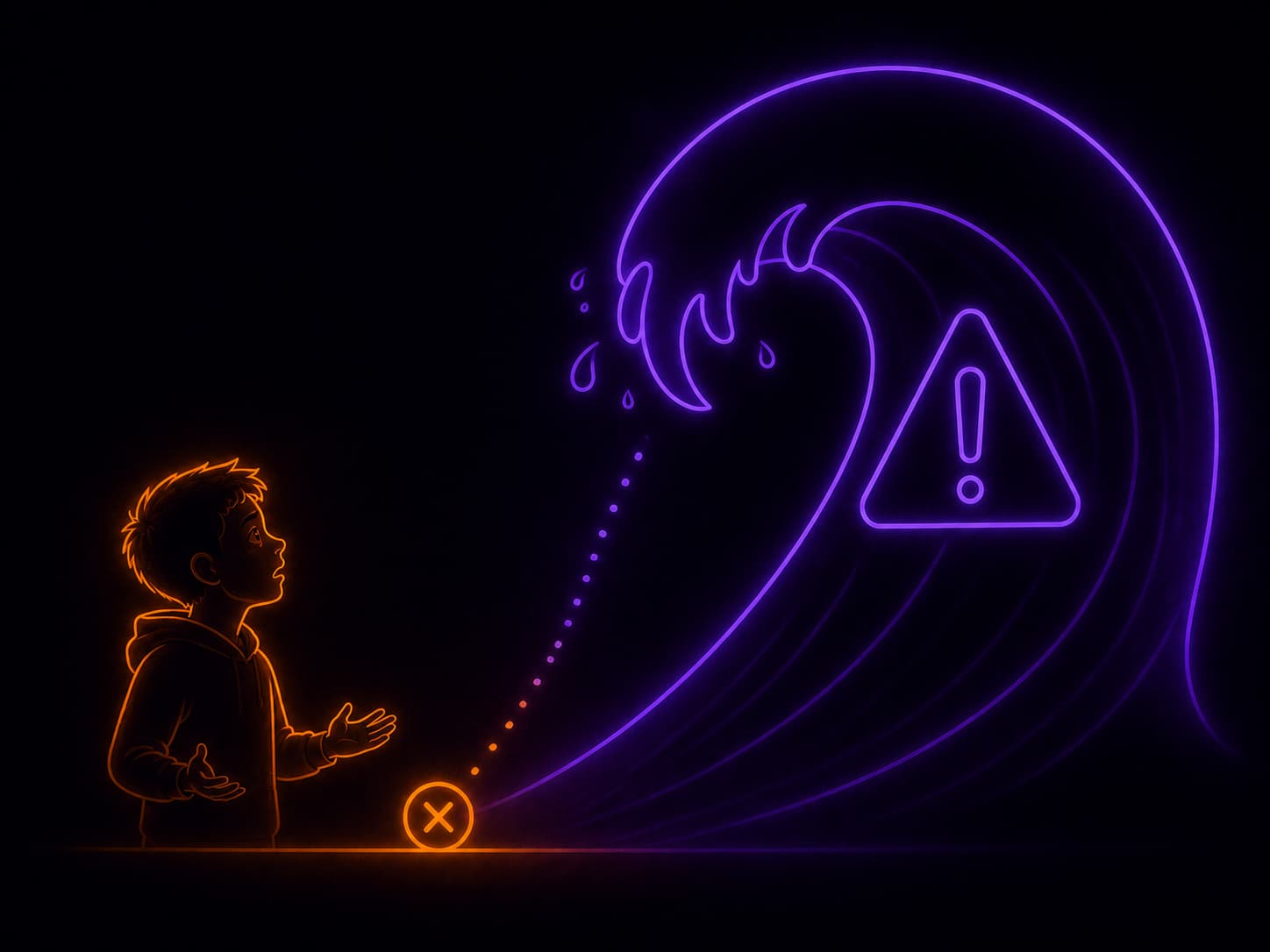
This isn't reality — it's dramatization
They take one event — and inflate it to the maximum, as if all of life depended on it. "It didn't work once" becomes "nothing will ever work". "A bad grade" becomes "there's no future". But between "one mistake" and "the end" lies a chasm.
This isn't exaggerating or a dramatic temperament. The child simply doesn't yet have the skill to see where the real event ends and the inflation begins. So they take the exaggeration as fact — the scale frightens them faster than thought can kick in.
The result — fear and a sense that "everything is being decided right now". The child freezes, gives up, or rushes to rescue something, even though the real consequence of the event is small and fixable.
"Sila Slova" — a detective drama that teaches critical thinking
50 episodes, 13 critical thinking lessons. Your child plays — but is actually learning to protect themselves.
Notices when a small event is turned into "the end of the world"
Separates the event from its consequences: "what will actually happen after this?"
Scales it down: "one situation isn't the whole story"
️ Doesn't believe "it's all over" when it's just loud words
Give your child the superpower of critical thinking
Episode 1 · Morning Without a Sister
Mum says there was never a sister. The school doesn't remember Sofia. But Marco remembers her laugh — and the diary in his hands is real…
Social proof
- Children completed the course
- 2,400+
- Satisfied parents
- 94%
- Optimal age
- 10–16 yrs
A bad mark used to ruin my daughter's whole evening — a total catastrophe. Now she asks: "But what will actually change because of this?" — and sees for herself that nothing is "over".
Questions about the course
Both at the same time. "Sila Slova" looks like a detective series, but every episode contains a hidden critical thinking lesson.
Ideal for 10–16 year olds. At this age, children are receptive to new thinking patterns and are still forming their views.
15–20 minutes per episode. Flexible schedule — your child can come back at any convenient time.
No. The demo episode is fully open — no registration, no subscription, no personal data required.
Try the demo — no registration required
Play demo