Does your child react to every "scary" the same way?
"Go or you'll miss your chance." "Do it or it'll be a disaster." "Buy it or you'll regret it." It sounds serious — and your child reacts automatically, because they have no way to tell real danger from hype.
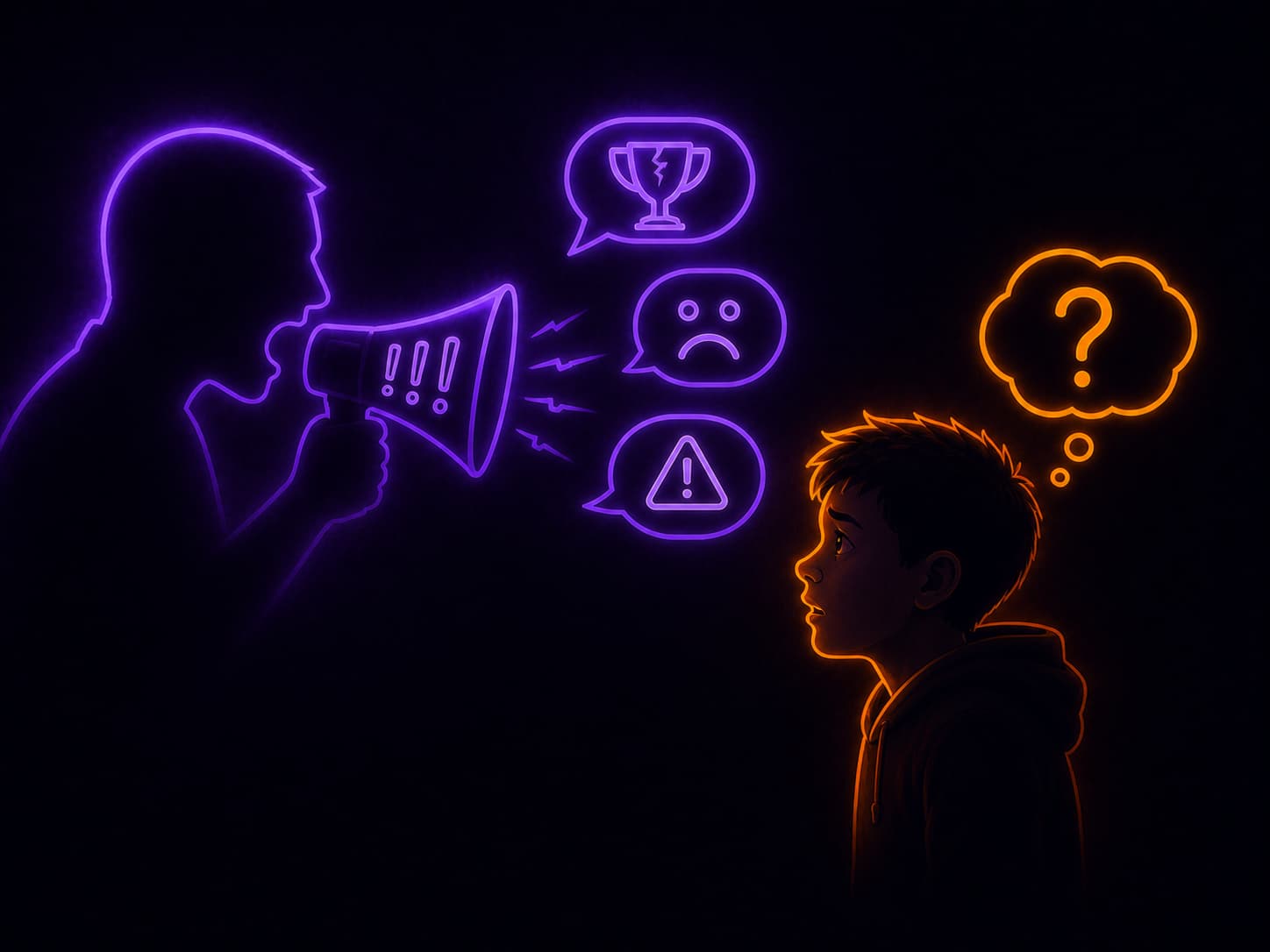
Not every fear is true
There are real warnings: where there's a clear "cause → effect" link and the danger genuinely exists. And there are exaggerations, where the fear is simply inflated to make someone act. The trouble is, both sound equally convincing — "it'll be bad" is said with the same tone either way.
This isn't being scared of everything or cowardice. The child simply has no tool to check: is there fact behind this fear, or only words? So they take any "scary" as a signal to act, without telling a warning apart from pressure.
The result — the child gives in even where nothing is actually at stake. They agree, rush, give up their own position — because "what if it's true", even though a loud phrase often has no real consequence behind it at all.
"Sila Slova" — a detective drama that teaches critical thinking
50 episodes, 13 critical thinking lessons. Your child plays — but is actually learning to protect themselves.
Tests the fear: is there fact behind it, or just loud words?
Asks: "what's the real cause-and-effect link here?"
Tells a real warning apart from an inflated "it'll be a disaster"
️ Doesn't act automatically on "scary" when there's no real threat behind it
Give your child the superpower of critical thinking
Episode 1 · Morning Without a Sister
Mum says there was never a sister. The school doesn't remember Sofia. But Marco remembers her laugh — and the diary in his hands is real…
Social proof
- Children completed the course
- 2,400+
- Satisfied parents
- 94%
- Optimal age
- 10–16 yrs
My daughter used to rush to do anything that came with "or it'll be bad". Now she asks: "But what exactly will happen?" — and often sees for herself that there's nothing behind the loud phrase.
Questions about the course
Both at the same time. "Sila Slova" looks like a detective series, but every episode contains a hidden critical thinking lesson.
Ideal for 10–16 year olds. At this age, children are receptive to new thinking patterns and are still forming their views.
15–20 minutes per episode. Flexible schedule — your child can come back at any convenient time.
No. The demo episode is fully open — no registration, no subscription, no personal data required.
Try the demo — no registration required
Play demo