Is your child already defending themselves for things they never said?
She said one thing. She was heard saying something else. Now she has to defend herself against words she never said.
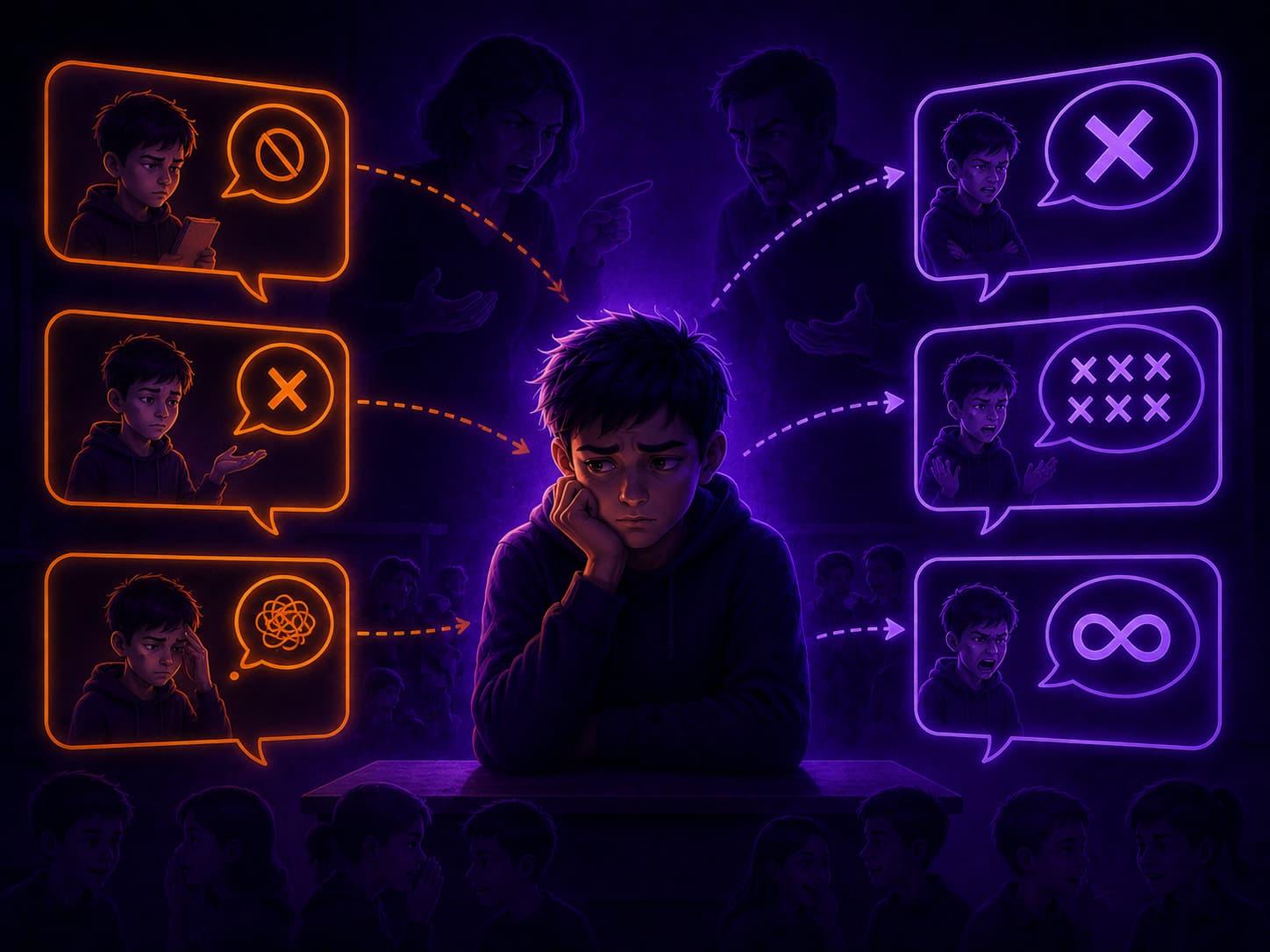
Thought substitution: when what you said becomes something you never meant
"I don't like this subject" → "so you don't want to learn anything at all". "I don't like this" → "so nothing is ever good enough for you". At school, at home, in conversations. The child says something specific — and it gets blown up into something extreme. They feel unheard, but don't know how to explain it.
This isn't poor explanation or unclear thinking. It's distortion — deliberate or not: one idea gets stretched into "always", "everything", "never" — to make it easier to argue against. The child ends up arguing against a version of their words they never actually said. And that version is harder to defend.
The result — the child's position gets lost, even when it was perfectly valid. "Maybe I did mean that?" — and they either start justifying themselves or give up entirely.
"Sila Slova" — a detective drama that teaches critical thinking
50 episodes, 13 critical thinking lessons. Your child plays — but is actually learning to protect themselves.
Notices when their words are being stretched to an extreme
Separates what they said from what others "added"
Calmly reclaims their position: "That's not what I said"
️ Holds their point when someone tries to replace it with their own version
Give your child the superpower of critical thinking
Episode 1 · Morning Without a Sister
Mum says there was never a sister. The school doesn't remember Sofia. But Marco remembers her laugh — and the diary in his hands is real…
Social proof
- Children completed the course
- 2,400+
- Satisfied parents
- 94%
- Optimal age
- 10–16 yrs
"So that means you think…" no longer throws her off. She's learned to say calmly: "No, that's not what I said" — and come back to her actual point.
Questions about the course
Both at the same time. "Sila Slova" looks like a detective series, but every episode contains a hidden critical thinking lesson.
Ideal for 10–16 year olds. At this age, children are receptive to new thinking patterns and are still forming their views.
15–20 minutes per episode. Flexible schedule — your child can come back at any convenient time.
No. The demo episode is fully open — no registration, no subscription, no personal data required.
Try the demo — no registration required
Play demo