Does your child pick between two options — because no one showed them the others?
"Either you come with us, or you sit alone." "Do it this way or not at all." The options sound logical — and your child picks one. They don't even think there's a third, because no one named it.
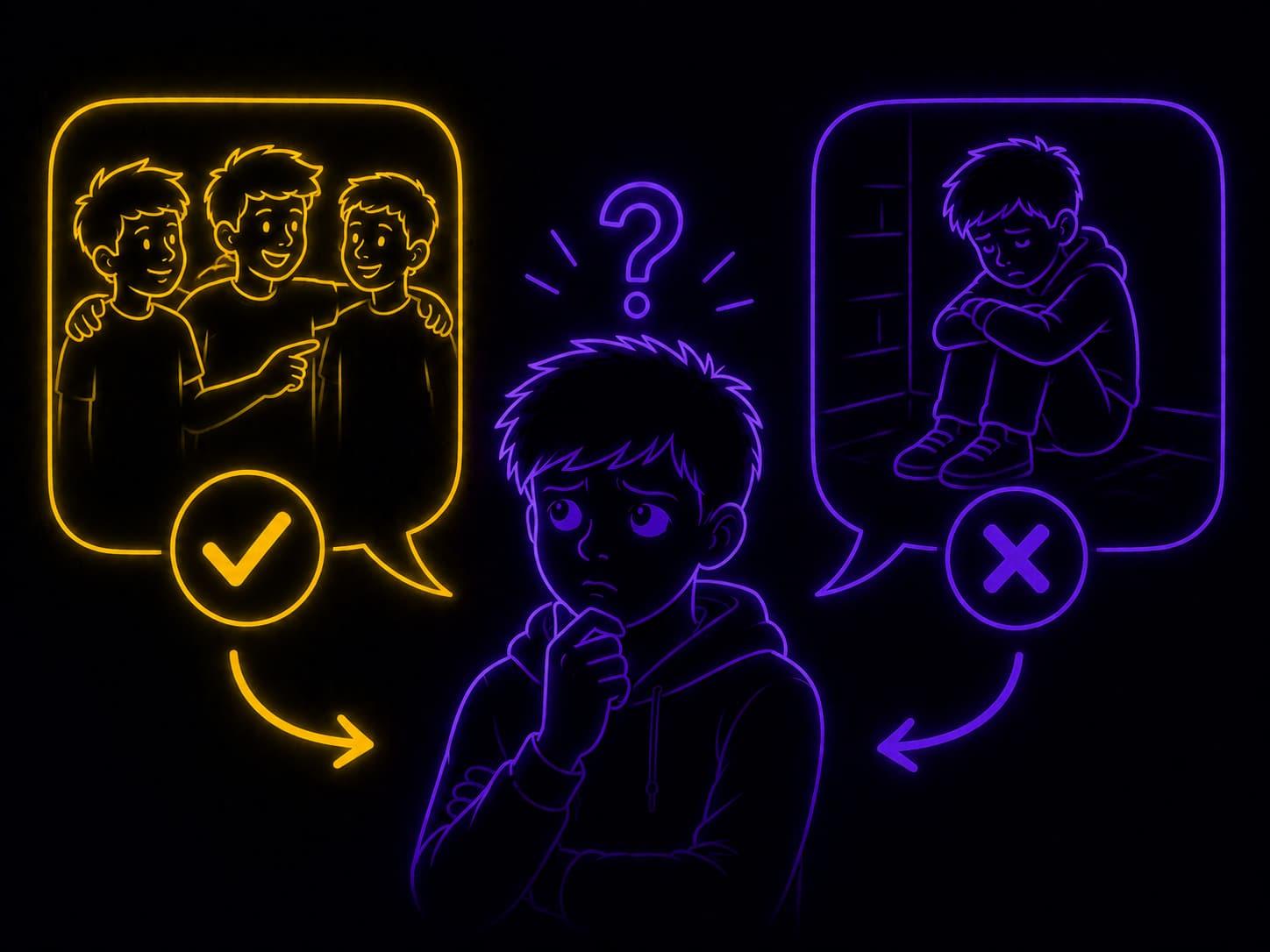
It's not the limit of reality — it's a limit drawn for them
The child isn't shown all the options — only the ones that suit whoever is offering them. Two points sound like the full list, when in fact there's a third and a fourth right beside them. They just weren't mentioned.
This isn't "not looking" or being too lazy to think. The child simply wasn't shown the other possibilities — and the "either-or" frame looks complete in itself. Without the skill to notice it, they accept the offered options as the only ones possible and never ask whether there's anything beyond them.
The result — the child doesn't see the solutions that actually fit them. They pick from someone else's short list, thinking it's all of reality — and walk right past the option that would have been better for them.
"Sila Slova" — a detective drama that teaches critical thinking
50 episodes, 13 critical thinking lessons. Your child plays — but is actually learning to protect themselves.
Notices they've only been shown part of the options
Asks "what else?" — and looks for what wasn't named
Understands: two options isn't the limit
️ Finds the third option and steps outside the imposed frame
Give your child the superpower of critical thinking
Episode 1 · Morning Without a Sister
Mum says there was never a sister. The school doesn't remember Sofia. But Marco remembers her laugh — and the diary in his hands is real…
Social proof
- Children completed the course
- 2,400+
- Satisfied parents
- 94%
- Optimal age
- 10–16 yrs
My daughter used to see only "either-or" and pick one of the two. Now she asks "what other option is there?" — and often finds one nobody even mentioned.
Questions about the course
Both at the same time. "Sila Slova" looks like a detective series, but every episode contains a hidden critical thinking lesson.
Ideal for 10–16 year olds. At this age, children are receptive to new thinking patterns and are still forming their views.
15–20 minutes per episode. Flexible schedule — your child can come back at any convenient time.
No. The demo episode is fully open — no registration, no subscription, no personal data required.
Try the demo — no registration required
Play demo