"Why did you take it and not say anything?" — and your child doesn't know which part to answer first?
Three questions hidden inside one. Your child answers one — and looks guilty for the rest. This isn't confusion: the question was tangled on purpose.
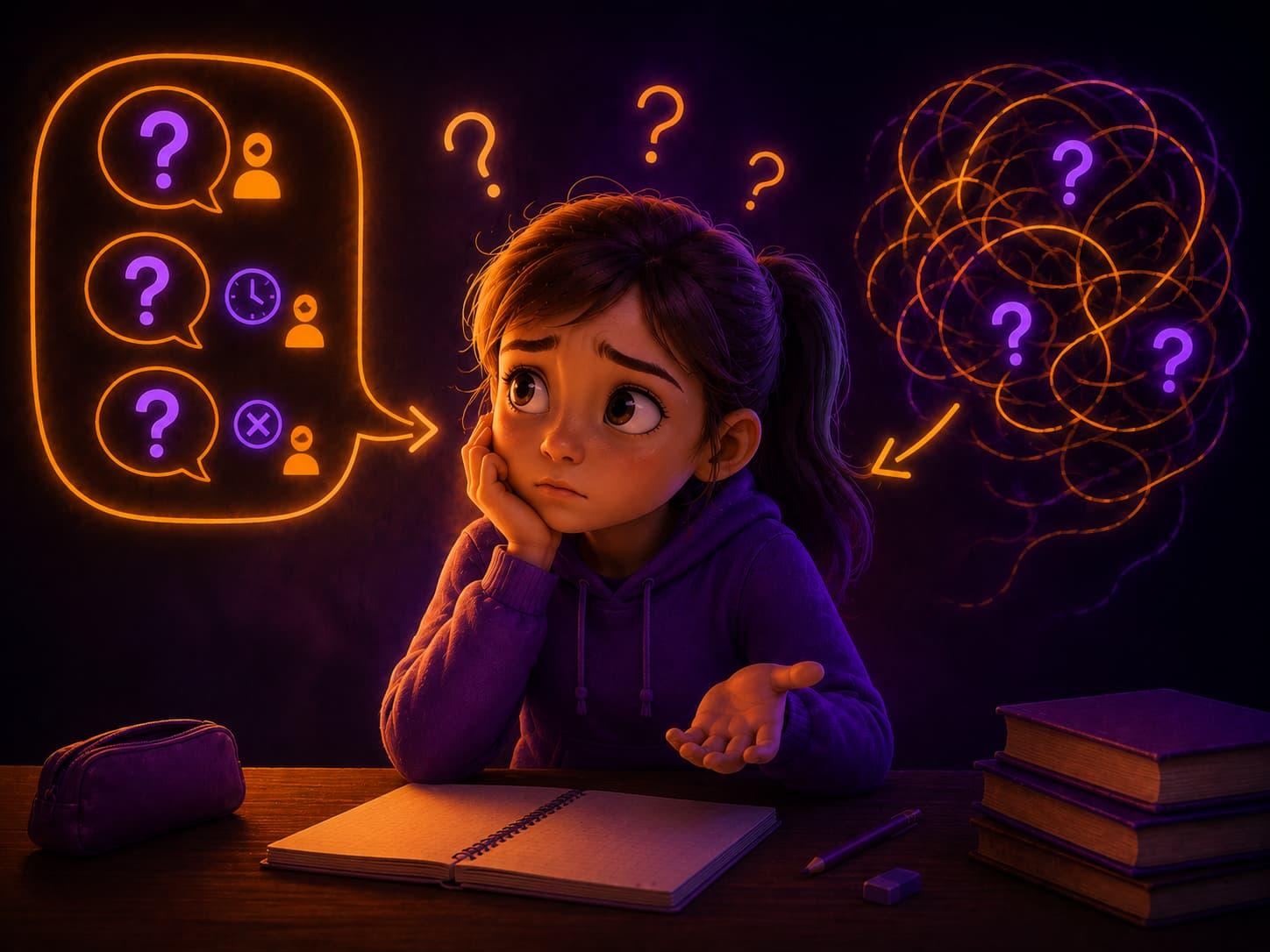
One question — but three inside it
"Why did you take it and not say anything?", "when will you stop doing this?", "why didn't you do it and didn't warn anyone?" — at school, at home, in everyday conversation. Your child answers — but something is always "off". Because they only answered one part.
This isn't one question — it's several, stitched into a single sentence: multiple statements and multiple questions at once. To answer properly, you first have to pull them apart. But without the skill to notice that, the child tries to answer everything at once — and comes across as muddled, guilty or lost.
The result — they lose the conversation before they've even opened their mouth. Not because they're guilty, but because the question was built so that no clean answer is possible.
"Sila Slova" — a detective drama that teaches critical thinking
50 episodes, 13 critical thinking lessons. Your child plays — but is actually learning to defend themselves with words.
Hears that one question is actually several — and says so out loud
Breaks a tangled question into parts and answers one at a time
Understands: not one question means not one answer
️ Doesn't get muddled or look guilty when a question is made complicated on purpose
Give your child the superpower of critical thinking
Episode 1 · Morning Without a Sister
Mum says there was never a sister. The school doesn't remember Sofia. But Marco remembers her laugh — and the diary in his hands is real…
Social proof
- Children completed the course
- 2,400+
- Satisfied parents
- 94%
- Optimal age
- 10–16 yrs
Compound questions used to make him freeze and go quiet. Now he calmly says "that's two questions" — and answers each one separately.
Questions about the course
Both at the same time. "Sila Slova" looks like a detective series, but every episode contains a hidden critical thinking lesson.
Ideal for 10–16 year olds. At this age, children are receptive to new thinking patterns and are still forming their views.
15–20 minutes per episode. Flexible schedule — your child can come back at any convenient time.
No. The demo episode is fully open — no registration, no subscription, no personal data required.
Try the demo — no registration required
Play demo