Does your child say "yes" just to keep others from being upset?
"You'll upset me," "I'll be offended," "that would hurt my feelings." Your child hears this — and picks someone else's mood over their own "no."
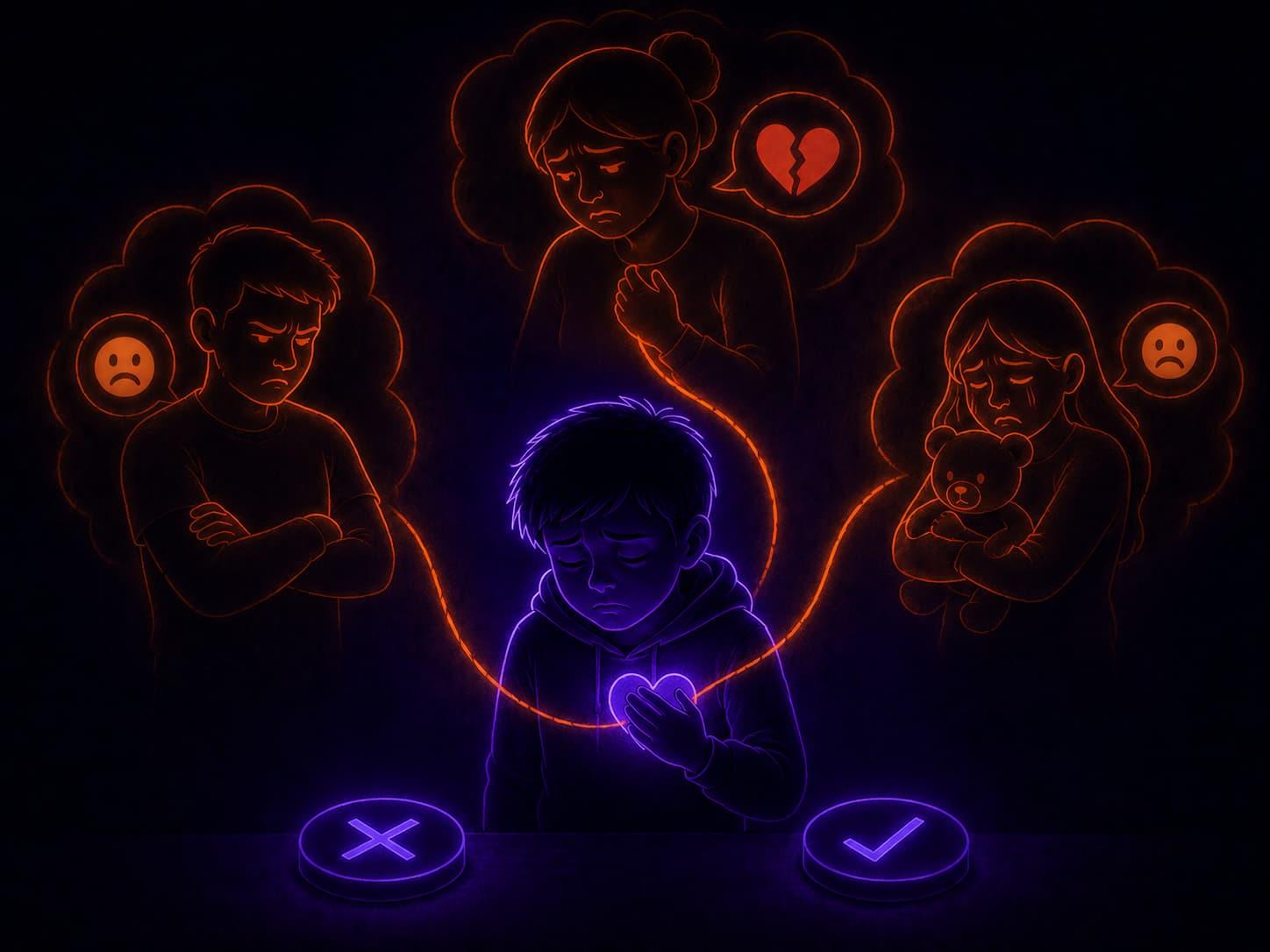
Emotional blackmail: when "no" feels scarier than "yes"
"You'll upset me." "That would hurt." "I'll be offended." It happens at school, from a friend, a relative, a classmate. Instead of a request, your child hears a warning: if you say no, this person will feel bad — and it'll be your fault.
This isn't a request — it's emotional blackmail. The adult (or peer) doesn't explain why it matters, doesn't propose to talk it through. They simply transfer responsibility for their own mood onto your child: "you decide whether I'll be okay." To avoid the preemptive guilt, the child agrees. They do what's "right" — not what they want.
Without the skill to recognize this technique, your child picks the option that "keeps the peace" every time. Their own "wants" go quiet. By age 10–11, they may not know what they want — because they've learned to ask "how will the other person feel if I say no?" first.
"Sila Slova" — a detective drama that teaches thinking
50 episodes, 13 lessons in critical thinking. Your child plays a game — but actually learns to separate their decisions from others' emotions.
Spots the moment they're being made responsible for someone else's mood
Understands: you're not obligated to "save" anyone from their feelings
Can say "no" calmly — without defenses or justifications
️ Stops automatically agreeing just to avoid "hurting" someone
Give your child the superpower of critical thinking
Episode 1 · A morning without sister
Mom says there was never a sister. School doesn't remember Sofia. But Marko remembers her laugh — and the diary in his hands is real…
Social proof
- Kids completed the course
- 2,400+
- Parents satisfied
- 94%
- Optimal age
- 10–16 y.o.
She used to be a ticking bomb: said yes to everything, then cried because "I can't." Now she can tell her friend "not today" — and doesn't spend three days apologizing for it. It's a different kid.
Questions about the course
Both at the same time. "Sila Slova" looks like a detective series, but every episode hides a critical-thinking lesson.
Best for 10–16 year olds. At this age, kids are receptive to new thinking patterns and are still forming their views.
15–20 minutes per episode. Flexible schedule — your child can come back whenever it's convenient.
No. The demo episode is fully open — no registration, no subscription, no data entry.
Try the demo — no registration required
Play demo