"Why are you so weird?" — and your child is already trying to "be normal"?
No explanation, no facts — just a label. The child doesn't understand what exactly is "wrong". But already feels: something's off with me.
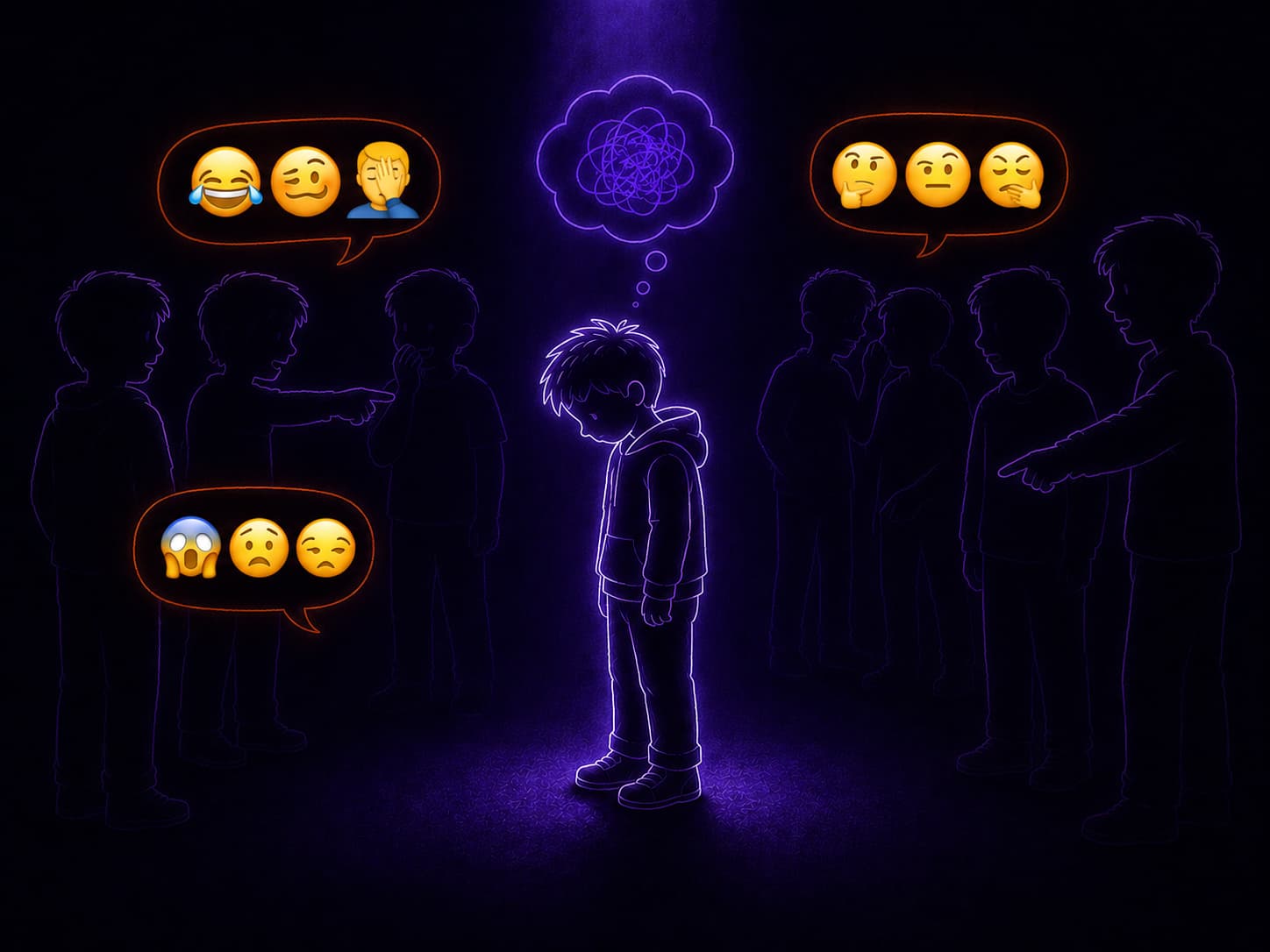
"You're just not normal" — that's not a fact, it's pressure
"Why are you so weird?", "you're just not like everyone else", "something's off with you". At school, in a group, in everyday conversations. The child doesn't understand what exactly is meant — but already feels uncomfortable and starts adjusting. Trying to "fix" themselves without knowing what to fix.
This isn't being oversensitive or weak. It's a natural response to vague pressure: when the person is judged rather than their action — and nothing concrete is given to work with. There's nothing to check, nothing to argue against. Just the feeling: "something is wrong with me".
The result — the child starts believing the label and changing to "be normal". They lose confidence and reshape themselves to fit expectations they don't even fully understand.
"Sila Slova" — a detective drama that teaches critical thinking
50 episodes, 13 critical thinking lessons. Your child plays — but is actually learning to protect themselves.
Spots a label without facts — "weird" ≠ a specific action
Sees that there's nothing verifiable behind such a word
Doesn't prove "I'm normal" — understands it's a pressure tactic
️ Doesn't accept someone else's word as the truth about themselves
Give your child the superpower of critical thinking
Episode 1 · Morning Without a Sister
Mum says there was never a sister. The school doesn't remember Sofia. But Marco remembers her laugh — and the diary in his hands is real…
Social proof
- Children completed the course
- 2,400+
- Satisfied parents
- 94%
- Optimal age
- 10–16 yrs
"You're just not normal" no longer makes her adjust. She's learned to ask: "What exactly is wrong?" — and when there's no answer, she understands: that's not about her.
Questions about the course
Both at the same time. "Sila Slova" looks like a detective series, but every episode contains a hidden critical thinking lesson.
Ideal for 10–16 year olds. At this age, children are receptive to new thinking patterns and are still forming their views.
15–20 minutes per episode. Flexible schedule — your child can come back at any convenient time.
No. The demo episode is fully open — no registration, no subscription, no personal data required.
Try the demo — no registration required
Play demo