Your child hears a confident, emotional speech — and already believes it's true?
"This is the best!", "this is a disaster!", "everyone normal has already done it!". Strong words, a confident voice — and that's enough. Your child reacts to the delivery, not the content.
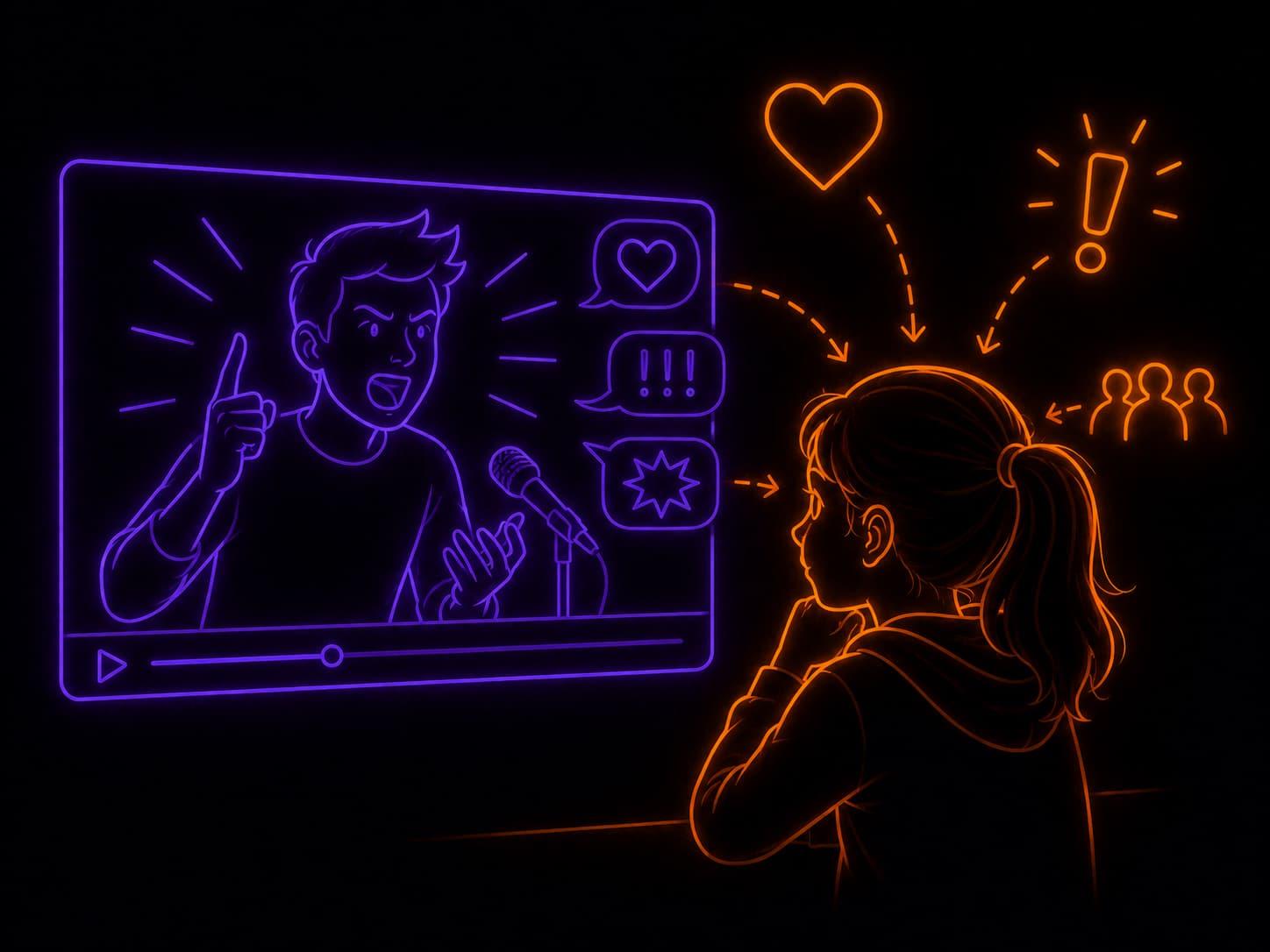
Lots of emotion, lots of words — and not a single fact
Your child hears a confident, emotional speech — and it feels true. "This is the best!", "this is a disaster!", "everyone normal has already done it!" — at school, online, in videos. Strong words, a confident voice — and that's enough to believe it.
But these aren't arguments — it's empty rhetoric. Lots of words, lots of emotion — but not a single fact. It sounds convincing, yet it proves nothing. The child reacts to the delivery, not the content.
Without the skill to spot it, the child mistakes confidence for truth. The result — they agree with something that was never even backed up. Not because they're "gullible", but because reacting to emotion is natural.
"Sila Slova" — a detective drama that teaches critical thinking
50 episodes, 13 critical thinking lessons. Your child plays — but is actually learning to defend themselves with words.
Tells confident delivery apart from a real argument
Asks one simple question — "where are the facts?" — and looks for the basis behind the words
Understands: emotion alone is not proof
️ Doesn't believe loud, empty words, no matter how confident they sound
Give your child the superpower of critical thinking
Episode 1 · Morning Without a Sister
Mum says there was never a sister. The school doesn't remember Sofia. But Marco remembers her laugh — and the diary in his hands is real…
Social proof
- Children completed the course
- 2,400+
- Satisfied parents
- 94%
- Optimal age
- 10–16 yrs
He used to take any confident video as the truth. Now he asks "where are the facts?" — and it's immediately clear how often there's nothing behind the words.
Questions about the course
Both at the same time. "Sila Slova" looks like a detective series, but every episode contains a hidden critical thinking lesson.
Ideal for 10–16 year olds. At this age, children are receptive to new thinking patterns and are still forming their views.
15–20 minutes per episode. Flexible schedule — your child can come back at any convenient time.
No. The demo episode is fully open — no registration, no subscription, no personal data required.
Try the demo — no registration required
Play demo