Can your child not back out — because they once "promised"?
"But you promised," "you said you would," "we agreed." The situation has changed — but they're being told they have "no right" to refuse.
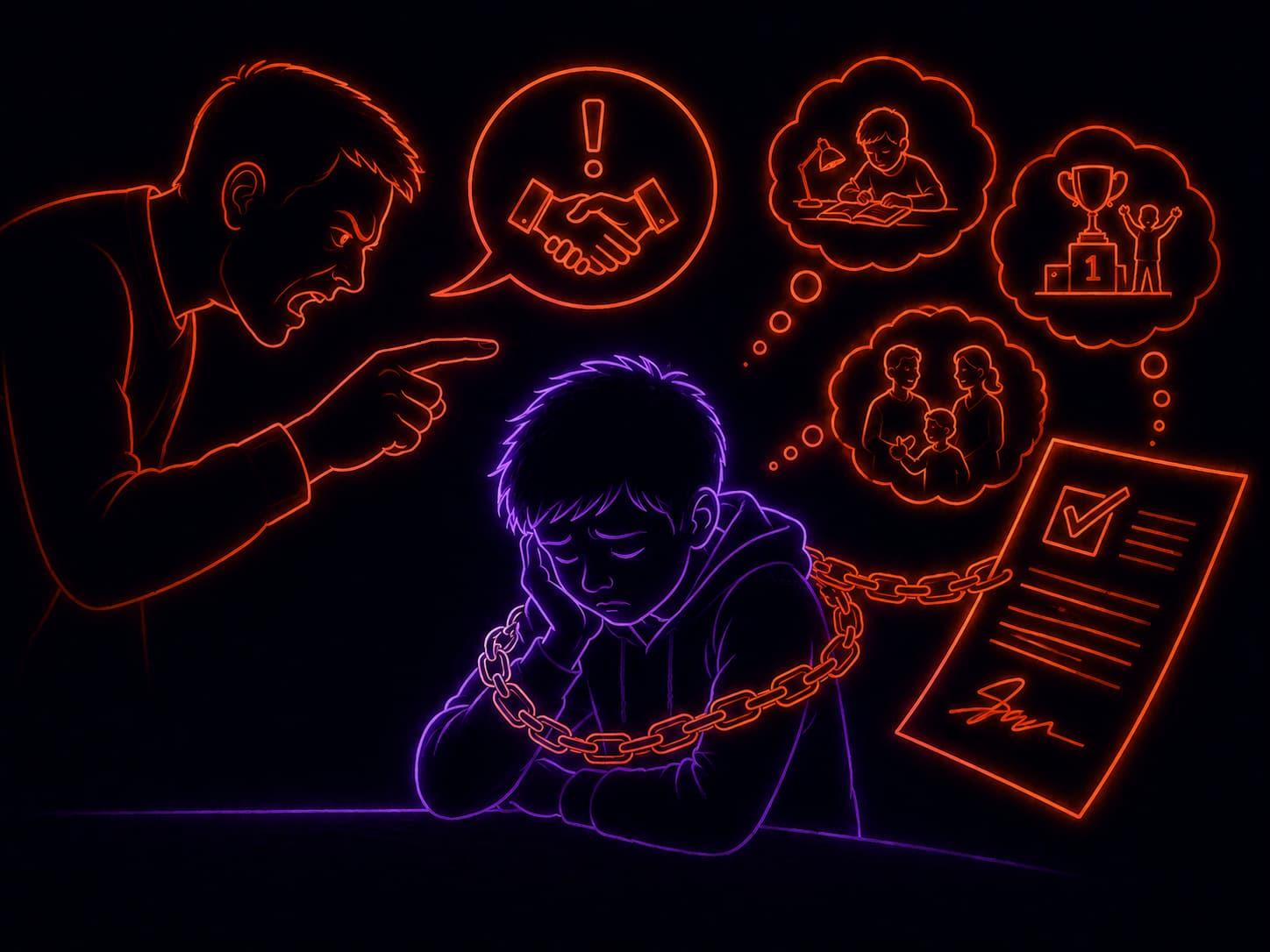
Promise as leverage: when yesterday's words block today's "no"
"But you promised." "You said you would." "We agreed." One sentence from the past gets used as an argument against your child today. It doesn't matter that they're tired, sick, changed their mind, learned something new, or the circumstances simply shifted. They're told: "you gave your word."
This isn't about responsibility — it's manipulation through obligation. Real responsibility lets you revisit a decision, discuss it, explain why it no longer fits. Here, no one asks for an explanation. They just press with the past, as if a child is bound to honor every word they ever said, in every new situation.
Without the skill to spot this technique, your child agrees. They go through with it — even when it hurts them. And gradually they lose the most important thing: the right to revisit their own decisions. By their teens this hardens into "I'm stuck with this because I once said yes, and now it's too late."
"Sila Slova" — a detective drama that teaches thinking
50 episodes, 13 lessons in critical thinking. Your child plays a game — but actually learns to separate responsibility from pressure and to calmly explain a change of mind.
Spots the moment a promise is turned into leverage instead of an argument
Understands: changing your mind isn't a betrayal — it's part of growing up
Can say: "Back then I thought differently. Now I don't. Let's talk about it."
️ Stops automatically going through with what hurts them just because "you promised"
Give your child the superpower of critical thinking
Episode 1 · A morning without sister
Mom says there was never a sister. School doesn't remember Sofia. But Marko remembers her laugh — and the diary in his hands is real…
Social proof
- Kids completed the course
- 2,400+
- Parents satisfied
- 94%
- Optimal age
- 10–16 y.o.
I thought my job was to teach her to "keep her word." Turned out she was keeping it with the last of her strength, afraid to disappoint anyone. Now she can simply say: "Mom, I've changed my mind, here's why." And not spend half an hour psyching herself up to say it.
Questions about the course
Both at the same time. "Sila Slova" looks like a detective series, but every episode hides a critical-thinking lesson.
Best for 10–16 year olds. At this age, kids are receptive to new thinking patterns and are still forming their views.
15–20 minutes per episode. Flexible schedule — your child can come back whenever it's convenient.
No. The demo episode is fully open — no registration, no subscription, no data entry.
Try the demo — no registration required
Play demo